

In which our editor rambles about things he’s read recently. Also a catch-all for random posts.
Roast Books: an interview with Faye Dayan
Wednesday, 21st September 2011. Comments are closed.
 Like many people, I first noticed Roast Books when they published A.C. Tillyer’s collection of short stories, An A-Z of Possible Worlds. It was a highly entertaining read, but also an exciting piece of publishing: the elaborate production, involving a boxed set of 26 booklets, was both eye-catching and perfectly suited to the material.
While An A-Z… might be Roast Books’ most elaborate volume, it’s be no means the only one: they started with a series of paperback novellas and short story collections called Great Little Reads, and more recent publications include Nik Perring’s collection of flash fiction, Not So Perfect. Their most recent book is Dogsbodies and Scumsters, a quirky collection of short stories by Alan McCormick with illustrations by Jonny Voss. Here’s the trailer:
With such a diverse and interesting selection of publications, I decided it was time to find out more about Roast Books and their plans, so I got in touch with their publisher Faye Dayan…
For a young publishing house with relatively few titles, you’ve managed to create a wonderfully diverse range: from the Great Little Reads with their textured covers, to the simple square of Nik Perring’s book, through to the extravagant A-Z of Possible Worlds, I’m not sure that you’ve tackled any two projects in the same way. What made you decide to take this approach?
Each book of short fiction Roast Books has published has deserved its own approach because we try to match form to content. I think it’s important that the shape and character of a book can reflect and relate to the stories inside.
Will you be revisiting the Great Little Reads series?
The novella is such a great genre, and often overlooked I think, so I would love to revisit the Great Little Reads series, although for the moment Roast Books is focused on short story collections.
Is it challenging to create a strong identity for Roast Books when you’re using a variety of formats? As opposed to, say, Peirene Press, who have one very distinct look to their titles.
You are right, this presents a challenge in creating an image for Roastbooks, but it is the philosophy of production, rather than the production itself which is consistent across all our books. The creative process of working with an author and collaborating on the design is very rewarding and something I would like to believe that our readers acknowledge and appreciate.
I’m sure they do. Your list is very focussed on short stories and novellas—a focus I can strongly identify with! I can see how short stories would be a logical choice for an experimental publisher like Roast Books, because the reading experience of shorter works can be more flexible than that of longer novels, where the book perhaps needs more to disappear more behind the writing. What’s the attraction for you in publishing short stories?
The genre of short stories is extensive, and there are fewer accepted publishing traditions associated with them. So firstly, as you said, as a new publisher, it gives more flexibility to experiment. Secondly many short stories are appreciated as they provide light bites of entertainment and stimulation, and the book format can be something which enhances this rather than detracts from it.

Do you see Roast Books moving into ebook publishing, or would you prefer to focus on the physical reading experience?
It’s interesting because the physical aspect of the book is intrinsic to Roast Books, so we will not release digital books without their physical counterpart. Having said that, we are developing an exciting little e-project which will give users the ability to self publish and distribute.
That’s interesting. More traditional publishers seem to be getting involved with self-publishing projects these days. It used to be very much a no-no, causing issues with credibility and conflicts of interest, but that certainly seems to be changing. How do you plan to reconcile the two very different types of publishing with Roast Books?
I agree it is changing. The type of self publishing where publishers put out a physical book in return for a hefty fee isn’t the only model any more. With ebooks, authors can create and distribute their own book online, in a speedy and cheap process, and this is something which part of our e-project will facilitate. Aspiring authors can bring their ebooks to the attention not just of potential readers but also potential publishers. There won’t necessarily be any overlap between this and our physical books at all.
How have you found the experience of entering the publishing industry? Do you think it’s a receptive world for new independents? Have you had any particular frustrations or pleasant surprises?
As you know things are changing very rapidly in the book industry and there is a lot of speculation about where it’s headed. But i have been certainly met some people within the industry who are extremely supportive and genuinely want new independents to succeed. It’s undoubtably tough, but you just have to keep going and see what’s around the next corner. We have just sold the film rights to My Soviet Kicthen by Amy Spurling, to Tailormade productions, which was an unexpected but welcome development.
What kind of team do you have? Do you work with a lot of people, or are you largely self-sufficient?
I work with the same designer, editor and publicist on each book, so its a very small operation, but I think this has its benefits! We work quickly, and it’s a lot of fun.
Are there any other emerging independent publishers that you particularly admire?
lol The Fiction Desk! Various Authors introduces a really interesting spectrum of new talent and I’m really enjoying it.
Thank you! I wasn’t fishing, I promise… Finally, what’s next for Roast Books?
We have some great projects planned for 2012, all collections of short stories, and also the development of our self publishing platform.
Find out more about Roast Books at their website, www.roastbooks.org.
Poetry Book Fair in London
Monday, 18th July 2011. Comments are closed.
An email newsletter just arrived from Charles at CB Editions, containing full details of the poetry book fair that he’s been planning.
It’s on Saturday, 24th September, from 10am – 5pm. There are readings through the day, and the fair is being opened at 11am by Michael Horovitz.
Publishers in attendance will be: Anvil, Arc, Carcanet, CBe, Donut, Egg Box, Enitharmon, flipped eye, HappenStance, if p then q, Nine Arches, Rack Press, Reality Street, Salt, Shearsman, Sidekick, Waterloo, Ward Wood, Waywiser, and zimZalla.
They’re not getting any external funding, so if you like the sound of this and you’re in London, it’s worth going along and showing support.
Here’s the flier:

The poetry book fair is part of a project CB Editions is running called ‘Book Now’. You’ll find more information on the CBe site.
Peirene Press: an interview with Meike Ziervogel
Wednesday, 15th June 2011. Comments are closed.
 The world of independent publishing, for all its challenges and controversies, is full of fascinating, energetic, and creative people. New publishers are appearing all the time, looking for fresh ways to connect readers with great writing. Over the next few months, we’ll be exploring some of this innovation by featuring a series of interviews with other independent publishers. First up is Meike Ziervogel (photo right) from Peirene Press.
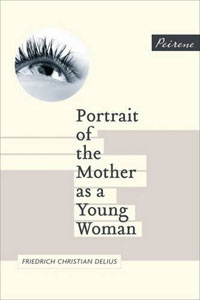
Peirene launched their first titles in 2010. They publish translated novellas, “that can be read in the same time it takes to watch a DVD.” We reviewed one of their titles, Portrait of the Mother as a Young Woman, last year.
I’m sure many of this blog’s readers are already familiar with Peirene, but for those that aren’t, would you like to start by telling me a little about your latest title, Tomorrow Pamplona?
Tomorrow Pamplona by Dutch author Jan van Mersbergen is a road movie in book form. It tells the story of two men, a family man and a boxer, who take a car journey from Amsterdam to Pamplona where they join in the bull run. It’s a book about men, their aggression and desire for freedom on the one hand, and their need for intimacy on the other.
Was it really only last year that Peirene published its first title? You’ve done a great job of establishing Peirene in a relatively short time. Part of that I think is down to the distinctive branding: the cream paperbacks with the cropped images and flaps. Could you tell me a little about how you settled on that design?
 Thank you for the compliment. From the start I knew that I wanted to go for a strong branding. I initially had a different designer and design, but that was before the first book was printed. I wasn’t happy with it. Then I found Sacha Davison-Lunt, Peirene’s current designer. She is great and we work well together because she understands to combine quality and elegance with individuality.
I think it would make me nervous to have one consistent design like that: What if I got bored of it? What if people stopped responding? Do you have any plans to publish in any other formats, or can you imagine doing so? I’m thinking of perhaps a hardback edition of a special title, as Hesperus have done a couple of times, or a radically different one-off cover design—say, as CB Editions did, breaking their distinctive typographic cover style for Knight Crew and Marjorie Ann Watts’s book.
Our design is very flexible. Next year will be Peirene’s Year of the Small Epic, short books with over 30 chapters each. Although the design will still be recognizably “Peirene”, the covers will reflect the annual theme.
Do you have any plans to release ebook editions of your titles?
Yes, we have just signed a contract with Faber Factory who will do the ebook distribution for us.
That’s interesting. What made you decide to work with another publisher on the ebooks?
About 60 publishers have already signed up with Faber Factory. They will do the e-book distribution for us. Since they are experts in that field, it’s much better that they do it for us rather than we trying to do it all by ourselves.
When do you expect to release the first ebook titles?
Very soon.
And in terms of content, can you see Peirene every publishing a book of short stories, or a longer novel, or even a book written originally in English?
Peirene No 6, Maybe This Time by Austrian Alois Hotschnig, which will be published in September, is a collection of short-stories. As for an English novella? If a well-known English language author has a novella in his or her drawer, I’d be delighted to have a look.
 Speaking of translation, one thing that worries me as a publisher about translated fiction is in the editorial side, the fact that one loses the immediacy of being able to work directly with the author, because effectively, however good the translation, the author and the publisher are always looking at different texts. This often wouldn’t apply to you, as I know you’re multi-lingual, but is that lack of an immediate connection ever an issue?
No, I wouldn’t say that. The original book and the translation are of course two different texts. I love texts. What is important to me is to present the English reader with a text that is true to the essence of the original but at the same time is a perfect English text, “as if it were written in English”, without of course changing names, street names etc.
Aside from the publishing, you also run a regular Salon. Could you tell me a little more about these events? Would you say they have played a big part in Peirene’s success to date? Do you have more plans for different types of event, perhaps touring the salon around the country?
The Peirene Salon is our flagship event. They take place in my own house, where I invite up to 50 people – readers, book lovers, critics, colleagues. Some people I know, others I have never met before. These Salons very much represent what Peirene stands for – to build a cohesive community of booklovers and readers. The evenings don’t present boring readings but are parties with performances, conversation, dinner and wine. In fact the Salons are now funded by The Wine Society and so the hospitality is always excellent. We are always booked up with a waiting list in place. The majority of the guests leave around 11pm but some stay on until 2 or 3 in the morning, drinking and talking. It’s wonderful. We also run regular Coffee Mornings in a local cafe. There we reach out to a different readership. Even children are welcome. And then we also have an event series called Peirene Experience where we present books in unusual places and different ways. For example, in March we held an event with the actor Jack Ellis and our German author Matthias Politycki in a bookshelf designer shop. The evening was a huge success.
Overall, how have you found the experience of entering the publishing industry? Any particular frustrations (naming no names, of course!) or pleasant surprises?
It’s an incredibly exciting journey because the book market is changing so fast and no one yet knows where it will take us. And to be right in the middle of this is a huge privilege.
And finally, just so that I’m absolutely certain, how exactly does one pronounce “Peirene”?
Watch the movie below and the mystery will be revealed…
The Voice of the Turtle
Monday, 23rd May 2011. Comments are closed.
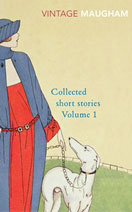 This brief quote from Somerset Maugham will come in handy if you’re the kind of person (like me) who can’t be bothered to read the latest Big Novel:
I have learnt by experience that when a book makes a sensation it is just as well to wait a year before you read it. It is astonishing how many books then you need not read at all.
It’s from the opening paragraphs of his story The Voice of the Turtle, in volume one of the Collected Short Stories.
Broadsheet Stories
Tuesday, 17th May 2011. Comments are closed.

Here’s another interesting publishing project that I’ve come across recently.
Broadsheet Stories print a monthly broadsheet—a single short story on one side of A3 paper—and distribute them to a selection of cafes and bookshops, mostly in south-west England, where customers are free to read them on the spot or take them home. (The photo above was taken in the Martello Bookshop in Rye.) Each venue begins with the first story and moves on one month at a time, meaning that there will be a different story available to read depending on where you are.
The stories are all necessarily short, coming in at just under 2000 words. Since starting in 2009, they’ve printed stories from a wide range of authors, including our own Matthew Licht.
Most of the stories can also be downloaded from the Broadsheet Stories website, but I think that takes away the fun of it: if you’re in the right part of the country, drop by one of the venues (listed here) and see which story they’ve got available this month.
Slightly Foxed: The (other) real reader’s quarterly
Monday, 16th May 2011. Comments are closed.

I’ve been meaning to post something about Slightly Foxed for a while now, but something kept getting in the way. Since getting Various Authors off to the printers, I’ve had a little more time, and finally found the chance to open their Spring 2011 issue, no. 29.
Literary publications can approach their content in one of two ways: they can provide a range of essays, fiction, and poetry (Stinging Fly, The Paris Review, Granta etc.), or they can specialise, aiming to do one thing well. For The Fiction Desk’s anthology series, I decided to focus only on short stories. On the other hand, Slightly Foxed prints nothing but concise, personal essays about old books, both classics and forgotten gems.
Volume 29 contains 17 essays on titles as diverse as The Phantom Tollbooth and On The Origin of Species. They’re very well crafted, personal essays, of the sort that we encounter (and in my case, write) all too rarely on book blogs. The editors actually describe the content very well on their own website:
Slightly Foxed is more like a bookish friend, really, than a literary periodical. Companionable and unstuffy, each quarter it offers 96 pages of personal recommendations for books of lasting interest, old and new. It’s an eclectic mix, covering all the main categories of fiction and non-fiction, and our contributors are an eclectic bunch too. Some of them are names you’ll have heard of, some not, but they all write thoughtfully, elegantly and entertainingly.
The cumulative effect is that of visiting the best kind of used book shop, where you spend all day hanging around, talking to everybody that comes in and leaving with an armful of books. In fact, the publishers of Slightly Foxed do also have a bookshop, Foxed Books. I was in there once, a long time before I’d read the quarterly, and liked it very much.
The books themselves are beautifully produced, with very nice paper used throughout: the feel of each edition is more than enough to justify the relatively high price tag (a four-volume subscription costs £36). As you can see from the picture above, they also put a great deal of care and thought into the packaging.
As well as the quarterly, there’s a series of attractive limited edition reprints of lost or forgotten works, known as Slightly Foxed Editions.
All in all, Slightly Foxed is a must-read for literature lovers. Try it at least once, or you’ll never know what you’re missing out on.
Shake Off by Mischa Hiller
Friday, 25th February 2011. Comments are closed.
 Regular readers of this blog might remember my review of Sabra Zoo, Mischa Hiller‘s excellent debut novel based around the 1982 massacre in Sabra Camp. I concluded that review by saying how much I was looking forward to Hiller’s next book.
Well, his next book is here now, and it doesn’t disappoint.
Shake Off is set in 1989 and is narrated by Michel, a young PLO agent living undercover in London as a student. Sabra rears its head here, too: Michel is both a victim and a creation of that event, which claimed the lives of his family and led to his adoption by a PLO operative who arranged his education and later his training in espionage. Now he lives alone in a bedsit, addicted to painkillers and shunning human contact. His life, from what he does to how he lives, has essentially become a complex coping mechanism for his past. The enforced solitude and paranoia of his work create a noise that blocks out the past from his days in the same way the codeine gets him through the nights:
So you have to be on continual alert: every public place is a potential meeting place; every alley or public toilet could be a dead-letter drop; every street, store and restaurant needs to be assessed for its counter-surveillance potential. You need to be constantly on the look-out for places to cache money and documents. Everyday objects must be considered potential concealers of microphones or cameras. Every person you meet could either be an agent wanting to get close or a possible recruit to the cause. Every woman that talks to you wants to trap you with the promise of sex. Every postcard has a hidden meaning. Everybody behind you could be following you, and it is your job to shake them off.
But while Michel is good at what he does—and we get plenty of insights into the tricks of his trade—he is still an unwitting pawn, and the comparison that kept coming to mind was Alfred Hitchcock. Michel is very much a Hitchcock innocent, drawn into a murky underworld that he shouldn’t have anything to do with—even if that drawing-in has taken place years before the story is set. The story too has a Hitchcockian feel to it: the tense but witty set-pieces involving counter-espionage in Foyle’s on the Charing Cross Road, or the move from the London of the opening chapters to a climax set in the wilds of Scotland. The novel as a whole feels like one of Hitchcock’s better films, and I doubt that the cinematic appeal of the book is entirely coincidental. Hiller certainly knows his cinema—his screenplay for Sabra Zoo won the European Independent Film Festival script competition.
That said, it doesn’t do this book justice to simply praise it as a cinematic book, or an embryonic movie. The writing is strong and confident, even when the narrator is not: Michel and his world are vividly evoked. Hiller is, I think, an excellent writer. Sabra Zoo went down well, and Shake Off is getting positive reviews absolutely everywhere. Well-written enough to please the serious reader, and fast-paced and engaging enough for the beach (if summer ever comes), Shake Off deserves to do very well.
The Great Gatsby computer game
Monday, 21st February 2011. Comments are closed.
Books aren’t always the most likely material for computer game adaptations. Classic (and public domain) characters sometimes make it across, like Dracula or Sherlock Holmes, but more direct book adaptations tend to be limited to speculative fiction titles: I remember playing The Hobbit on my rubber-keyed ZX Spectrum, and there have been a series of games based on Lord of the Rings and the Discworld series. Games like Blade Runner probably owe more to the film adaptations than to the source material.
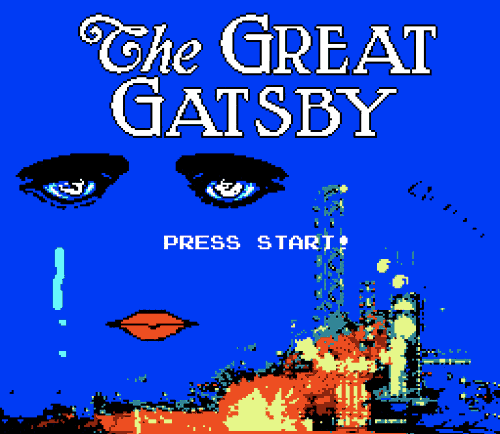
 A tongue-in-cheek exception to the rule is this new video game adaptation of The Great Gatsby, produced in the style of an old-school NES platformer. Level one involves battling your way through Gatsby’s party, picking off waiters and flappers with your incredible boomerang hat; level two is a train chase sequence climaxing in a battle with the disembodied eyes of Dr. T. J. Eckleburg (see right). I can’t tell you what happens after that, because Eckleburg got me (see right again).
The Great Gatsby game is a free-to-play Flash game: go over to greatgatsbygame.com and give it a try. You’ll probably do better than I did.
The Tiny Wife by Andrew Kaufman
Tuesday, 18th January 2011. Comments are closed.
US-based independent Madras Press publish small books, containing one or more short stories, and donate the proceeds to charities nominated by their authors. The books themselves are very nicely done, attractive little square paperbacks. The first titles were released just before Christmas in 2009, and over the recent holidays they published their second series, which includes a new story from Andrew Kaufman.
 Andrew Kaufman is a McSweeney’s contributor, and has two novels published in the UK by Telegram: All My Friends are Superheroes and The Waterproof Bible. He has a whimsical style, perhaps reminiscent of somebody like a Richard Brautigan, which probably works better in small doses like this than it does in his more extended work. Maybe for that reason, I enjoyed The Tiny Wife more than anything else of his that I’ve read. It begins with a bank robbery, in which the thief takes one item of sentimental value from everybody present. As a result of these losses, (more…)
Titanic Thompson by Kevin Cook
Monday, 17th January 2011. Comments are closed.
 I don’t usually cover nonfiction here on the site, unless there’s a strong connection to the world of storytelling. Titanic Thompson: the Man Who Bet on Everything both is and isn’t an exception to that rule.
Titanic Thompson, born Alvin Thomas, grew up in the early years of the last century, and became known as one of the greatest confidence tricksters of the era. He made millions of dollars through elaborate cons, and by hustling pool, poker and golf.
The path he cut through twentieth century America also brought him into contact with some of the period’s most famous and notorious characters: he was in on the poker game that led to the death of Arnold Rothstein, and he tricked $500 out of Al Capone over a bet regarding how far he could throw a lemon. He became the basis for the character of Sky Masterson in Guys and Dolls. He also found time to get married five times, and to kill five people.
Titanic’s success seems to have come from a variety of factors: he was naturally talented and dextrous, allowing him to master the sleight-of-hand needed in many of his tricks; he devoted long hours to practice, performing simple actions over and over until he had mastered the most unlikely abilities; he would put great energies into laying the groundwork for his proposition bets, often visiting the planned scene hours or days beforehand, rearranging signposts, planting props, and bribing bystanders. Finally, he had an ability with people, both understanding them and charming them, which allowed him to present his ‘proposition bets’ in just the right way. Here’s a typical story, that takes place during a poker game in a Toledo nightclub:
Ti wad twenty-seven, but the crooks all talked down to him. One night, taking a break to go to the bathroom in the cellar, grumbling to himself, he was startled by a rat. He bumped a crate that fell and pinned the rat to the floor. Watching the animal struggle, he thought there had to be a play in this.
He rejoined the card game, and soon enough another player got up to go to the toilet. “Watch your step down there,” Ti said. “That cellar’s crawling with rats. I swear I could go down there and kill one inside a minute.”
That got a laugh from the loudest gangster. “This kid thinks he’s the Pied Piper!” He asked Ti if he’d like to put his money where his mouth was. Ti bet every dollar he had and headed for the stairs.
“No tricks, kid,” the gangster said. “That rat better be warm. I ain’t paying off on some dead pelt you got in your pocket. And I’m timing you. You got sixty seconds.”
Titanic returned to the cellar. A few seconds later the poker players heard a gunshot. Ti came upstairs and dropped the still-warm rat in the loud man’s lap. They stopped calling him “Kid” after that.
In a story like Thompson’s, it’s never really going to be possible to separate fact from fiction. He was by profession a dissimulator, and always on the move to escape his own increasing fame. His victims, from whom many of these stories must originate, would also not be expected to underplay the ingenuity of the man who conned them. Even Cook’s afterword allows that there may be a little ben trovato in the anecdotes that make up the book. But that hardly matters: Titanic Thompson is about a legend as much as it is about a real man. It reads like a series of adventure stories, and like the best adventure stories it makes you want to believe every word, and induces a kind of nostalgia for an unlikely time when a man could come from nowhere to make his way around America, meeting everybody who was anybody, amassing and losing fortunes through skill, cunning, and marking cards, and encountering a never-ending supply of honourable gangsters who (almost) always paid up on losing a bet.
