

In which our editor rambles about things he’s read recently. Also a catch-all for random posts.
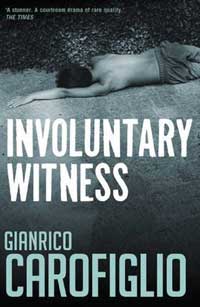
Involuntary Witness by Gianrico Carofiglio
Thursday, 11th March 2010. Comments are closed.
 I’ve written about Bitter Lemon Press before, when I reviewed Saskia Noort’s Back to the Coast. They’re a solid niche press, publishing crime fiction, most of it translated, in paperback editions.
Involuntary Witness, which they’ve just republished with a new cover (see left) is the debut novel from one of their lead authors, the Italian one-time anti-mafia prosecutor Gianrico Carofiglio.
The protagonist, in this novel and its sequels, is Guido Guerrieri, a defence lawyer who lives and works in Bari, a coastal town in the Italian region of Puglia (the area usually referred to as “the heel of the boot”). At the beginning of the novel, we find Guido in a bad state: still reeling from the end of his marriage, which has left him unable to concentrate at work and suffering from claustrophobia. When you add the development of a flirtation between Guido and his upstairs neighbour Margherita; and his latest case, involving an African streetseller accused of child murder, you get a pretty good idea of the formula that Carofiglio is working with. (more…)
Nazi Literature in the Americas by Roberto Bolaño
Friday, 8th January 2010. Comments are closed.
I’m becoming increasingly reluctant to bother with doorstep novels, and when Roberto Bolaño’s much-lauded 2666 was published in English a year or so ago – all nine hundred pages of it – I decided that I didn’t have the time or the will to read it. Still, I was curious to see what kind of a writer lay behind the hype of 2666, and the recent UK publication of Nazi Literature in the Americas, one of Bolaño’s earlier, shorter works, has given me the chance. (more…)
An A-Z of Possible Worlds, by A. C. Tillyer
Sunday, 6th December 2009. Comments are closed.
I’ve always had a problem with over-the-top book design. From “interesting” binding styles to “witty” notes on the copyright page, whenever I see postmodern trickery on a book, I begin to worry that it’s trying to make up for a lack of anything more substantial. A generation of media studies students have demonstrated that postmodernism is art for the untalented, creativity for the uncreative.
I’ll probably never love McSweeney’s.
However, there are times – rare though they may be – when an eccentricity of design is simply the extension of a genuine creative process, rather than a substitute for it. If I was talking about architecture or technology, I’d say something about the form following the function and then we could all talk about Apple (or we could have, until they introduced those eye-burning glossy screens). This is a website about books, though, so I must be talking about A. C. Tillyer’s An A-Z of Possible Worlds, the latest publication from the relatively new Roast Books. (more…)
The Original of Laura by Vladimir Nabokov
Friday, 20th November 2009. Comments are closed.
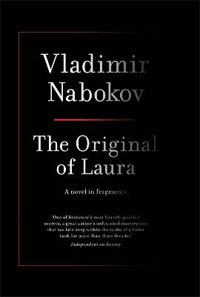 So here it is, then. The biggest and most controversial publication event in literature since the reissue of A Moveable Feast four months ago.
That last disturbance in the force was caused by Seán Hemingway, retooling a book that was already a posthumous retool of a manuscript left by his grandfather. The Original of Laura is a generation closer: here is Dmitri Nabokov, son of Vladimir, presenting his father’s unfinished manuscript, which he has the sense to do verbatim—in facsimile, no less.
Having left the text itself alone, Dmitri Nabokov contributes an introduction, in which he discusses the history of the manuscript (written during his father’s final years, when his health was failing). It’s a strange introduction, drawing parallels that aren’t quite parallels: he points out that Nabokov had tried to destroy drafts before, including a draft of Lolita, but then, those weren’t published as drafts. (more…)
The Last Englishman: The Double Life of Arthur Ransome
Friday, 6th November 2009. Comments are closed.
Petrograd:
…standing suddenly alone and exposed in an open space, he watched a horseman gallop up, point a pistol in his face, and demand, ‘For or against the people?’
‘I am English,’ replied Ransome, helplessly.
‘Long live the English!’ shouted the horseman, and galloped away.
 I’ve always thought that the Swallows and Amazons books of Arthur Ransome, with their multiple layers of imaginative reality and potent sense of independence, are particularly fine training material for readers. And I’ve assumed – as one does, about the things one likes – that his appeal was more or less universal, but his books do seem to have a peculiarly British appeal: they’re not available in Italy, for example, and even the more literary, nautically minded Americans I’ve mentioned him to haven’t heard of him.
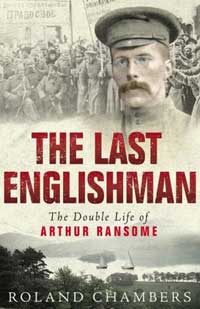
Perhaps this primarily British appeal explains the title of Roland Chambers’ new biography of Arthur Ransome, The Last Englishman. It’s a bit of an off-the-peg title, catchy but not particularly fitting, evoking an anachronistic quixotism that might have been more appropriate for Russell Miller’s Conan Doyle biography. (more…)
Legend of a Suicide by David Vann
Monday, 26th October 2009. Comments are closed.
It can be interesting to watch the subtleties of marketing change between different editions of the same book. From covers to titles to apparent target audience, dramatic changes take place as books move across oceans. David Vann‘s Legend of a Suicide is a good example: in the US, it’s a collection of short stories built around a central novella; in its UK edition, published by Penguin, it’s a novel. Neither description is inaccurate. (more…)
Twitter Tips for Authors
Thursday, 15th October 2009. Comments are closed.
More and more authors, from unpublished novices to international heavyweights, are getting involved with Twitter. If you’re planning to join them, here are some tips for good author tweeting:
Setting up your account
- Be yourself, not your book. In the short term, it may seem like a good idea to set up your Twitter account as the title of your book, but it’s probably better to use your own name instead. There are two reasons for this:
- People are more likely to respond to a person than a book – it feels less like advertising, and it’s more natural to build a relationship with a person.
- Think long term. If you do get followers for this book, what happens when your next one comes out? Do you change the account details, confusing people, or open a new Twitter account for the new book, and start again from scratch? Tweet as yourself, and your account can grow with you through your whole career.
(You can still promote your latest book as part of your identity – in your profile image, as the background image on your feed, with a mention in your bio line.)
- Provide a bio, url, and profile photo. Before you tweet your first tweet, take a moment to compose a good line to go in your bio, just to let people know who you are. It may not seem like much, but a single sentence can change you from an anonymous twitterer into an actual, live person worth connecting too. The profile photo is important too, as it helps establish your identity. Finally, don’t forget to add a link to your blog or Website.
- Don’t follow anybody until you’ve made a few tweets. When you follow somebody, they’ll get an email. They’ll probably then come and have a look at your feed to see who this new follower is. If there’s nothing there, they’ll go away and forget all about you. If you’ve posted a few interesting tweets, they’re more likely to follow you back, or at least take note.
War on the Margins by Libby Cone
Monday, 14th September 2009. Comments are closed.
Many of the books that have crossed my desk lately have involved some kind of attempt to combine didactic fact with fiction: not just historical fiction, but books with a real desire to offload information onto the reader. Maybe “edutainment” based on real-life events or people makes for easy marketing, or maybe authors just aren’t active enough, and must find the truth of their adventures in history books rather than their own lives. War on the Margins, Libby Cone’s debut novel about the Jewish experience of the Nazi occupation of the Channel Islands, takes its own approach to the challenge. It’s successful in some ways but less so in others. (more…)
The Impossible Stories of Zoran Zivkovic
Wednesday, 9th September 2009. Comments are closed.
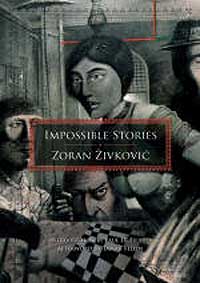 Do we have a canon of contemporary European literature? It’s hard to imagine so, because no two European countries can draw on exactly the same sources. The view of the canon from France might include a Spanish novel that has been translated into French but not English. The Germans might be all over a Danish novel that the rest of us will never see. I might put the best of Zoran Zivkovic’s work forwards for inclusion, but this would make no sense to readers in Italy, who have yet to receive any of it in Italian.
Even where the potential for translation grants has been thoroughly exhausted, our national views of European literature are separated by cultural differences; different things matter to different races. This means that any nation’s view is refracted through not one but two separate prisms, angling certain rays into oblivion and focussing others more sharply. For a writer to claim a place in any European canon, there needs to be enough universality in his themes to angle his light directly. (more…)
Ramsey Campbell, Probably
Tuesday, 4th August 2009. Comments are closed.
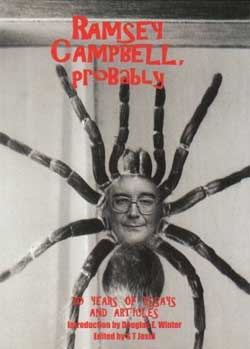 When exactly did horror fiction become unacceptable? Is there a year, perhaps, a specific date after which anything supernatural becomes the exclusive possession of the recluse, something to occupy spotty teenage boys until they discover spotty teenage girls?
I think we’re all agreed that Frankenstein and Dracula are allowed on any bookshelf. Likewise, nobody would bat an eye if they spotted the spine of an M.R. James or the ghost stories of Charles Dickens; these snuck into the mainstream through a door that somebody left open at Christmas. H.P. Lovecraft is permissible for the sake of nostalgia, and Poe, well, he wrote poems and stories set in France, so he must be okay. Shirley Jackson’s a woman, so what she writes can’t really count as horror, and anyway, she’s a Penguin classic. Horror novels aren’t published by Penguin Classics: they’re printed by suspicious-sounding paperback imprints you’ve never heard of, they’re written by people with names like Hank Buckweather; they have titles like The Rats from the Pits of the Blood Demon and covers that feature skulls with a serpent coiling out of one eye socket and a scorpion scuttling out of the other. There will also certainly be blood… (more…)
