

In which our editor rambles about things he’s read recently. Also a catch-all for random posts.
Television for book lovers
Friday, 8th May 2009. Comments are closed.
While book sites and blogs may be wary of turning their attention too directly towards mere television, it’s interesting how often conversation in the smoky, after hours underworld of the comments section turns to favourite series. Here, The Fiction Desk takes a look at some of the television programs most often cited and loved by the acolytes of the printed page. (more…)
The Penguin Magnum Collection
Thursday, 7th May 2009. Comments are closed.
I’m not usually a big fan of repackaging books—it tends to happen a lot these days, and I think the noise can distract from new fiction. However, there are exceptions: I liked the recent (and ongoing) series of Atlantic Crime Classics, and the new Magnum Collection from Penguin, published today, also seems to be a good-looking little set. (more…)
The Last Dickens by Matthew Pearl
Thursday, 9th April 2009. Comments are closed.
One of the hardest challenges for a novelist is knowing what to leave out of the book. Whether the background details to a story are invented by the author or based on historical research, it’s the author’s responsibility to make choices, inserting only the most relevant information, where it’s most useful, and keeping things tightly to the theme of the story. Too much superfluous detail can suck the life right out of a story, and this is the problem with The Last Dickens, Matthew Pearl‘s tale of a hunt for the final installments of Charles Dickens’s unfinished final book.
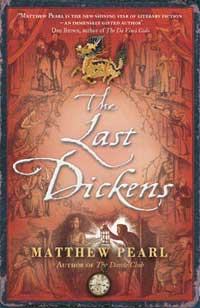 The Last Dickens is Matthew Pearl’s third stab at a literature-themed thriller. The first was The Dante Club, a tale of murders surrounding the first American translation of the Divine Comedy. From what I remember, The Dante Club wasn’t badly executed at all. Pearl came unstuck with his follow-up, The Poe Shadow, which presented the reader with plenty of research, but little in the way of story.
The Last Dickens comes somewhere between these two: it pays more attention to story than The Poe Shadow did, but it’s still hampered by constant asides into research. (more…)
The Murders in the Rue Morgue & C. Auguste Dupin
Friday, 3rd April 2009. Comments are closed.
I’ve been revisiting the Atlantic Crime Classics range lately, taking a look at their February title, a new edition of Edgar Allan Poe’s Dupin stories, collected under the title of the first and most famous tale, The Murders in the Rue Morgue. (more…)
Rimbaud by Edmund White
Thursday, 2nd April 2009. Comments are closed.
I’ve preached before about the importance of reading outside your comfort zone. While usually that advice was directed at new writers, it’s a good idea for all of us not to turn too quickly away from the less familiar shelves in the bookstore.
One of my own literary blind spots is poetry. While I appreciate and enjoy “poetic prose” (and there’s a vague term for you), and have a great fondness for a well-turned phrase, straight verse has always been something of a mystery to me. I don’t read it, write it, or edit it. So, while it’s not technically poetry itself, Edmund White‘s Rimbaud: Double Life of a Rebel, published earlier this year by Atlantic Books, looked like a good opportunity for me to place at least a toe outside of my own prosaic comfort zone, and start to read around the genre a little. (more…)
Little Monsters by Charles Lambert
Saturday, 14th March 2009. Comments are closed.
So much of the writing I see—even the good writing—isn’t connected to anything but itself. It seems to have come from a vacuum: the author knows the page, the words know the page, but neither of them have any association with the wider world. As a result, there’s nothing for me as a reader to carry away from the book. The prose is polished and utterly disposable.
The best fiction, on the other hand—the stuff that actually does matter—addresses our perceptions of the world around us, inspires us to have our own ideas, and brings us into a dialogue. To put it simply, the difference between competent fiction and worthwhile fiction is the difference between having dinner with a friend who talks knowledgeably about himself, and having dinner with a friend who talks knowledgeably about the world.
 Charles Lambert, one suspects, would address rather broader issues than his own moustache over the cacio e pepe. It’s true of his blog, and it’s certainly true of Little Monsters, his debut novel, which was published last year in hardback and last month in paperback… giving me a timely excuse to review it.
Little Monsters is a story about refugees, which is also timely—perhaps more so this year than last. The story is split between protagonist Carol’s childhood as a refugee from a broken family in 1960s Britain, and modern Italy, where Carol is volunteering as an English teacher in a “welcoming” centre for asylum seekers. (For more about the increasingly nasty situation with immigrants in Italy at the moment, I’ll again direct you to Lambert’s blog, but think “fear-mongering poster campaigns, government-sponsored vigilante gangs”.) (more…)
Sherlock Holmes and the monster of the week
Saturday, 7th March 2009. Comments are closed.
 While I was reading The Adventures of Arthur Conan Doyle, I came across the following passage in which Conan Doyle described his reasons behind moving Sherlock Holmes from the original format of serialised novels into self-contained short stories—a move he credits with at least part of the detective’s subsequent success: (more…)
Arctic Chill by Arnaldur Indridason
Friday, 6th March 2009. Comments are closed.
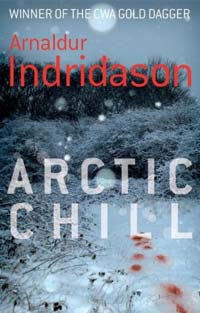 I’ve come across a few references recently to Icelandic crime writer Arnaldur Indridason. All of them have been positive, praising his use of the Icelandic setting and the development of his brooding detective, Erlendur. His latest, the first I’ve read, is Arctic Chill.
The book begins, naturally enough, with the discovery of a body. This time it’s a young boy, the son of a Thai immigrant, who’s found dead on the ice outside his apartment building. From this beginning, Indridason builds his theme of tensions surrounding Iceland’s immigrant communities, set neatly against the backdrop of the freezing weather. All of that’s exactly what you think it’s going to be: it’s good, it works. But there’s rather too much of everything else. (more…)
The Adventures of Arthur Conan Doyle by Russell Miller
Monday, 2nd March 2009. Comments are closed.
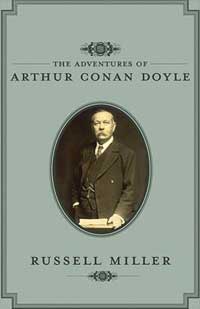 I think I’ve mentioned before on The Fiction Desk that I’m partial to reading the odd literary biography. The Brief Lives from Hesperus are handy little books, but nothing quite matches the satisfaction of a bulkier, blow by blow account of an author’s life, particularly when that author is as interesting as Arthur Conan Doyle.
Russell Miller’s The Adventures of Arthur Conan Doyle was published late last year by Harvill Secker, and as usual with that imprint, it’s a lovely edition. (Am I the only person who wishes more publishers gave their hardbacks the solid, flat spines that Harvill Secker use?) (more…)
Burial (and Always the Sun) by Neil Cross
Saturday, 31st January 2009. Comments are closed.
One of the pleasures—and privileges—of my work is watching a manuscript evolve through rewrites, as the author develops new ways to settle the prose around the story. It’s also fascinating to watch published authors evolve from novel to novel, and thanks to Simon and Schuster, I’ve recently been doing that with Neil Cross. I started with Always the Sun, his fourth novel (published in 2004), and then moved on to his new book Burial. (more…)
