

IndieBooks website to sell titles from independent publishers
Friday, 27th November 2009.
On Tuesday, Legend Press will launch a new online bookshop dedicated to independent publishers.
The project, entitled IndieBooks, will be selling a range of just fifty titles from a variety of independent presses. Each month, the twenty-five lowest selling titles will be replaced with new titles, while the other half are carried over to the next month—in effect, creating a situation where half the stock is editorially selected, and the other half determined by sales figures. (Keep reading …)
Charles Lambert and the hypocrisy of power (interview)
Tuesday, 24th November 2009.
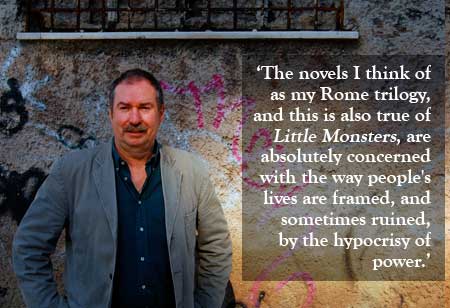
‘Thank you,’ he laughs, ‘but I’m not sure I’d want to write any more of it.’
Well, never mind. With three novels in the works, he probably has enough writing to be getting on with.
We’re having lunch in Sardi Due, a seafood restaurant in Garbatella, Rome. Nearby is the university where Charles Lambert teaches English, one card from the deck with which Anglophones in Italy pay their way. (He also works as an editor for the UN’s Food and Agriculture Organisation, and has previously taught political science at the American University of Rome).
 It’s the combination of Lambert’s expatriate experience and the fish-out-of-water upbringing described in ‘All Gone’ that together led to his debut novel. Little Monsters contrasts the protagonist Carol’s experiences as a child, growing up with an unloving aunt after a family tragedy, with her later life as an adult, when she’s living in Italy and helping at a centre for asylum seekers. There she tries to connect to another lost child.
Among other things, Little Monsters is about the reconciliation of the past and the present, power and helplessness, and the way we define ourselves in concert with, or opposition to, the people who surround us. (Keep reading …)
The Original of Laura by Vladimir Nabokov
Friday, 20th November 2009.
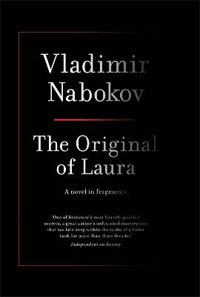 So here it is, then. The biggest and most controversial publication event in literature since the reissue of A Moveable Feast four months ago.
That last disturbance in the force was caused by Seán Hemingway, retooling a book that was already a posthumous retool of a manuscript left by his grandfather. The Original of Laura is a generation closer: here is Dmitri Nabokov, son of Vladimir, presenting his father’s unfinished manuscript, which he has the sense to do verbatim—in facsimile, no less.
Having left the text itself alone, Dmitri Nabokov contributes an introduction, in which he discusses the history of the manuscript (written during his father’s final years, when his health was failing). It’s a strange introduction, drawing parallels that aren’t quite parallels: he points out that Nabokov had tried to destroy drafts before, including a draft of Lolita, but then, those weren’t published as drafts. (Keep reading …)
The return of the bookseller-publisher?
Tuesday, 17th November 2009.
This summer saw the publication of The Seven Lives of John Murray, Humphrey Carpenter’s biography of that great independent publishing house. It’s a terrific read all round – of which more below – but something particular that struck me was its description of a publishing model common during the late 18th century, when the first John Murray arrived in London and started his business.
Most likely, you’d start by opening a bookshop. With this as your base, you’d then begin to acquire copyrights and print books, either by yourself or with other publishers, each taking a percentage share in the project. You’d sell these through your own shop, and at a discount to other shops – meanwhile buying their books to sell yourself. The result was that the industry across London functioned as a kind of loose cooperative, with shops selling their own books and each other’s. (Keep reading …)
The Last Englishman: The Double Life of Arthur Ransome
Friday, 6th November 2009.
Petrograd:
…standing suddenly alone and exposed in an open space, he watched a horseman gallop up, point a pistol in his face, and demand, ‘For or against the people?’
‘I am English,’ replied Ransome, helplessly.
‘Long live the English!’ shouted the horseman, and galloped away.
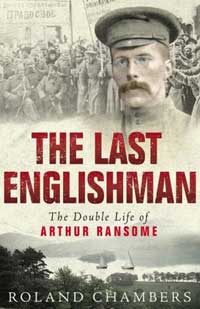 I’ve always thought that the Swallows and Amazons books of Arthur Ransome, with their multiple layers of imaginative reality and potent sense of independence, are particularly fine training material for readers. And I’ve assumed – as one does, about the things one likes – that his appeal was more or less universal, but his books do seem to have a peculiarly British appeal: they’re not available in Italy, for example, and even the more literary, nautically minded Americans I’ve mentioned him to haven’t heard of him.
Perhaps this primarily British appeal explains the title of Roland Chambers’ new biography of Arthur Ransome, The Last Englishman. It’s a bit of an off-the-peg title, catchy but not particularly fitting, evoking an anachronistic quixotism that might have been more appropriate for Russell Miller’s Conan Doyle biography. (Keep reading …)
