

The Great Gatsby computer game
Monday, 21st February 2011.
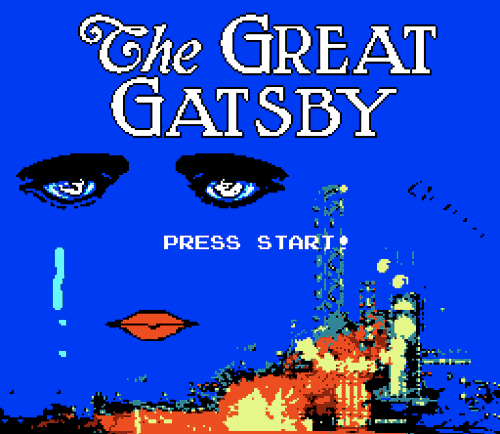
Books aren’t always the most likely material for computer game adaptations. Classic (and public domain) characters sometimes make it across, like Dracula or Sherlock Holmes, but more direct book adaptations tend to be limited to speculative fiction titles: I remember playing The Hobbit on my rubber-keyed ZX Spectrum, and there have been a series of games based on Lord of the Rings and the Discworld series. Games like Blade Runner probably owe more to the film adaptations than to the source material.
 A tongue-in-cheek exception to the rule is this new video game adaptation of The Great Gatsby, produced in the style of an old-school NES platformer. Level one involves battling your way through Gatsby’s party, picking off waiters and flappers with your incredible boomerang hat; level two is a train chase sequence climaxing in a battle with the disembodied eyes of Dr. T. J. Eckleburg (see right). I can’t tell you what happens after that, because Eckleburg got me (see right again).
The Great Gatsby game is a free-to-play Flash game: go over to greatgatsbygame.com and give it a try. You’ll probably do better than I did.
The Tiny Wife by Andrew Kaufman
Tuesday, 18th January 2011.
US-based independent Madras Press publish small books, containing one or more short stories, and donate the proceeds to charities nominated by their authors. The books themselves are very nicely done, attractive little square paperbacks. The first titles were released just before Christmas in 2009, and over the recent holidays they published their second series, which includes a new story from Andrew Kaufman.
 Andrew Kaufman is a McSweeney’s contributor, and has two novels published in the UK by Telegram: All My Friends are Superheroes and The Waterproof Bible. He has a whimsical style, perhaps reminiscent of somebody like a Richard Brautigan, which probably works better in small doses like this than it does in his more extended work. Maybe for that reason, I enjoyed The Tiny Wife more than anything else of his that I’ve read. It begins with a bank robbery, in which the thief takes one item of sentimental value from everybody present. As a result of these losses, (Keep reading …)
Titanic Thompson by Kevin Cook
Monday, 17th January 2011.
 I don’t usually cover nonfiction here on the site, unless there’s a strong connection to the world of storytelling. Titanic Thompson: the Man Who Bet on Everything both is and isn’t an exception to that rule.
Titanic Thompson, born Alvin Thomas, grew up in the early years of the last century, and became known as one of the greatest confidence tricksters of the era. He made millions of dollars through elaborate cons, and by hustling pool, poker and golf.
The path he cut through twentieth century America also brought him into contact with some of the period’s most famous and notorious characters: he was in on the poker game that led to the death of Arnold Rothstein, and he tricked $500 out of Al Capone over a bet regarding how far he could throw a lemon. He became the basis for the character of Sky Masterson in Guys and Dolls. He also found time to get married five times, and to kill five people.
Titanic’s success seems to have come from a variety of factors: he was naturally talented and dextrous, allowing him to master the sleight-of-hand needed in many of his tricks; he devoted long hours to practice, performing simple actions over and over until he had mastered the most unlikely abilities; he would put great energies into laying the groundwork for his proposition bets, often visiting the planned scene hours or days beforehand, rearranging signposts, planting props, and bribing bystanders. Finally, he had an ability with people, both understanding them and charming them, which allowed him to present his ‘proposition bets’ in just the right way. Here’s a typical story, that takes place during a poker game in a Toledo nightclub:
Ti wad twenty-seven, but the crooks all talked down to him. One night, taking a break to go to the bathroom in the cellar, grumbling to himself, he was startled by a rat. He bumped a crate that fell and pinned the rat to the floor. Watching the animal struggle, he thought there had to be a play in this.
He rejoined the card game, and soon enough another player got up to go to the toilet. “Watch your step down there,” Ti said. “That cellar’s crawling with rats. I swear I could go down there and kill one inside a minute.”
That got a laugh from the loudest gangster. “This kid thinks he’s the Pied Piper!” He asked Ti if he’d like to put his money where his mouth was. Ti bet every dollar he had and headed for the stairs.
“No tricks, kid,” the gangster said. “That rat better be warm. I ain’t paying off on some dead pelt you got in your pocket. And I’m timing you. You got sixty seconds.”
Titanic returned to the cellar. A few seconds later the poker players heard a gunshot. Ti came upstairs and dropped the still-warm rat in the loud man’s lap. They stopped calling him “Kid” after that.
In a story like Thompson’s, it’s never really going to be possible to separate fact from fiction. He was by profession a dissimulator, and always on the move to escape his own increasing fame. His victims, from whom many of these stories must originate, would also not be expected to underplay the ingenuity of the man who conned them. Even Cook’s afterword allows that there may be a little ben trovato in the anecdotes that make up the book. But that hardly matters: Titanic Thompson is about a legend as much as it is about a real man. It reads like a series of adventure stories, and like the best adventure stories it makes you want to believe every word, and induces a kind of nostalgia for an unlikely time when a man could come from nowhere to make his way around America, meeting everybody who was anybody, amassing and losing fortunes through skill, cunning, and marking cards, and encountering a never-ending supply of honourable gangsters who (almost) always paid up on losing a bet.
Soho! (a board game about literary magazines)
Tuesday, 7th December 2010.

From the creators of Smoke: A London Peculiar, comes this new board game, which is possibly the first board game with a literary magazine theme.
The players in Soho! each take on the role of editor of a literary magazine, and must make their way around the board (representing Soho), collecting pieces of prose from half a dozen recalcitrant, boozing writers. Obstacles and aids come in the form of plastic counters and two decks of playing cards – one representing Soho’s pubs, the other a ‘Bloody Writers!’ deck. The editors can attempt to reach the writers by foot, by taxi, or by Boris Bike. The winner is the first editor to collect all six pieces of prose, thus completing their magazine.
‘Soho’ is being launched on Wednesday 8th December at the Blue Posts, 22 Berwick Street, in Soho, which will presumably lead to Jumanji-like levels of boardgame-themed meta-reality.
Nightjar Press chapbooks
Tuesday, 7th December 2010.

As I immerse myself ever more deeply in the world of the short story, I’m discovering a near endless range of great publishers and publishing projects. As well as magazines and anthologies, I’ve seen some terrific chapbooks. I’m hoping to cover a wide selection of these over the coming months, but let’s start with Nightjar Press.
Nightjar Press is run by Nicholas Royle, himself author of half a dozen books and editor of several anthologies – including Best British Short Stories, a new upcoming annual anthology from Salt. They publish dark, disquieting stories, each of which examines general themes through a paranormal lens: a chill for now, a thought for later. (Keep reading …)
Nourishment by Gerard Woodward
Friday, 3rd December 2010.
 Gerard Woodward started out as a poet, and his prose career began a decade ago with a well received trilogy – August, I’ll Go to Bed at Noon, and A Curious Earth. I managed to watch those books go by without actually picking any of them up; the publication of Nourishment, his new standalone novel, seemed like a good opportunity to start catching up.
Nourishment opens in the early days of the Second World War, in the London household of Tory Pace. Everything has changed with the advent of war: her husband Donald has been called up, the children have been packed off to the countryside, and her mother has come to live with her, ‘possessed of an unshakeable belief that her daughter, and London generally, needed her.’
Before long, the mother has set the tone of the novel by bringing home a piece of mystery meat from the remains of a bombed-out butcher’s shop – possibly a pork joint, probably a chunk of the bombed-out butcher. Then Tory receives a letter from Donald, who has become a prisoner of war. The letter contains scraps of general news, and an urgent request for dirty letters from his wife: ‘I mean really filthy, full of all the dirtiest words and deeds you can think of… Love to your ma, Donald.’ (Keep reading …)
Big news from The Fiction Desk
Friday, 26th November 2010.
I’m delighted to announce some big news from The Fiction Desk.
 We’re relaunching as a publisher, with a list dedicated to promoting new fiction.
Our first project is a quarterly anthology of new short stories, featuring a wide range of stories from both new and established writers. We’re excited – this series is going to be a great platform for a variety of writers, and a great way for readers to get a regular fix of quality short fiction.
Subscriptions are available now, and more details of the first volume, Various Authors, will follow over the next few weeks. (For now, there’s the cover on the right.)
We’ll also be increasing new content here on the blog, reviewing new titles from other publishers, and sharing news from across the book trade.
If you’d like us to keep you updated with our plans, sign up for our newsletter here.
New Pocket Classics from White’s Books
Wednesday, 24th November 2010.

White’s Books first appeared a couple of years ago, when they launched a series of attractive hardcover classics with decorated cloth. It’s a project run under the art direction of David Pearson, an ex-Penguin designer who worked on projects like the Great Ideas series, and the cheap green Popular Classics.
The latest from White’s is a new series of Pocket Classics. (Keep reading …)
Amazon launches in Italy – with a unique advantage
Tuesday, 23rd November 2010.
Amazon has launched its latest branch in Italy, and from the looks of things, they have a unique advantage, thanks to the remarkably complex laws regarding book pricing in Italy.
According to a publication from the Federation of European Publishers (download the .pdf here), bookshops in Italy are limited to offering a maximum of 15% discount from the publisher’s recommended price.
There are exceptions: old stock can sometimes be discounted, as can books sold to schools. Unusually, though, they also allow unlimited discounts for books sold online.
Effectively, this means that Amazon’s Italian store will be able to sell books at an unlimited discount, while their bricks and mortar competitors will be limited to – at most – knocking 15% from the price of their books.
This may be a unique example of a case where price protection laws could actually work against the independent bookshops, and in favour of Amazon.
Sharp Sticks, Driven Nails
Wednesday, 27th October 2010.
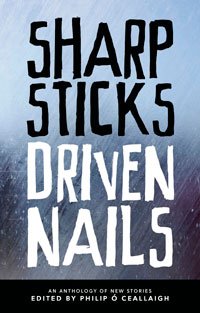 A few months ago, I asked Twitter users to recommend their favourite literary magazines. The response was pretty impressive, and not least from the magazines themselves, many of whom are active on Twitter. I wound up with a list of a good dozen publications to explore, and first among these was Dublin-based The Stinging Fly, a triannual publication of new writing: poems, fiction, essays, reviews.
As well as the magazine, there’s The Stinging Fly Press, which publishes novels and anthologies. Among other titles, they’ve published Kevin Barry’s There are Little Kingdoms, and Fighting Tuesdays, a collection of stories by fourth year students from Larkin Community College.
Their latest publication is Sharp Sticks, Driven Nails, an anthology of new short stories edited by Philip Ó Ceallaigh. (Keep reading …)
