

Little Monsters by Charles Lambert
Saturday, 14th March 2009.
So much of the writing I see—even the good writing—isn’t connected to anything but itself. It seems to have come from a vacuum: the author knows the page, the words know the page, but neither of them have any association with the wider world. As a result, there’s nothing for me as a reader to carry away from the book. The prose is polished and utterly disposable.
The best fiction, on the other hand—the stuff that actually does matter—addresses our perceptions of the world around us, inspires us to have our own ideas, and brings us into a dialogue. To put it simply, the difference between competent fiction and worthwhile fiction is the difference between having dinner with a friend who talks knowledgeably about himself, and having dinner with a friend who talks knowledgeably about the world.
 Charles Lambert, one suspects, would address rather broader issues than his own moustache over the cacio e pepe. It’s true of his blog, and it’s certainly true of Little Monsters, his debut novel, which was published last year in hardback and last month in paperback… giving me a timely excuse to review it.
Little Monsters is a story about refugees, which is also timely—perhaps more so this year than last. The story is split between protagonist Carol’s childhood as a refugee from a broken family in 1960s Britain, and modern Italy, where Carol is volunteering as an English teacher in a “welcoming” centre for asylum seekers. (For more about the increasingly nasty situation with immigrants in Italy at the moment, I’ll again direct you to Lambert’s blog, but think “fear-mongering poster campaigns, government-sponsored vigilante gangs”.) (Keep reading …)
Sherlock Holmes and the monster of the week
Saturday, 7th March 2009.
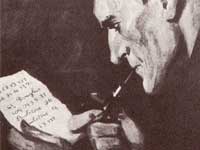 While I was reading The Adventures of Arthur Conan Doyle, I came across the following passage in which Conan Doyle described his reasons behind moving Sherlock Holmes from the original format of serialised novels into self-contained short stories—a move he credits with at least part of the detective’s subsequent success: (Keep reading …)
Arctic Chill by Arnaldur Indridason
Friday, 6th March 2009.
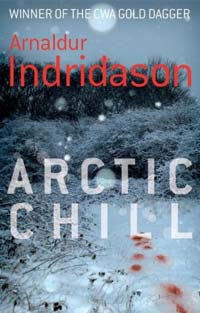 I’ve come across a few references recently to Icelandic crime writer Arnaldur Indridason. All of them have been positive, praising his use of the Icelandic setting and the development of his brooding detective, Erlendur. His latest, the first I’ve read, is Arctic Chill.
The book begins, naturally enough, with the discovery of a body. This time it’s a young boy, the son of a Thai immigrant, who’s found dead on the ice outside his apartment building. From this beginning, Indridason builds his theme of tensions surrounding Iceland’s immigrant communities, set neatly against the backdrop of the freezing weather. All of that’s exactly what you think it’s going to be: it’s good, it works. But there’s rather too much of everything else. (Keep reading …)
The Adventures of Arthur Conan Doyle by Russell Miller
Monday, 2nd March 2009.
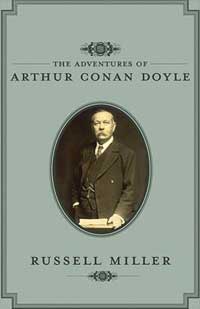 I think I’ve mentioned before on The Fiction Desk that I’m partial to reading the odd literary biography. The Brief Lives from Hesperus are handy little books, but nothing quite matches the satisfaction of a bulkier, blow by blow account of an author’s life, particularly when that author is as interesting as Arthur Conan Doyle.
Russell Miller’s The Adventures of Arthur Conan Doyle was published late last year by Harvill Secker, and as usual with that imprint, it’s a lovely edition. (Am I the only person who wishes more publishers gave their hardbacks the solid, flat spines that Harvill Secker use?) (Keep reading …)
Ten free ways to improve your writing
Sunday, 1st March 2009.
From paid critiques to writing workshops and courses, there are a lot of good ways to spend your money on improving your writing abilities. Fortunately, there are also a lot of good ways to work on your writing without spending a penny. I’ve listed ten (well, technically nine) below. (Keep reading …)
