

Are book blogs and novellas made for each other?
Sunday, 20th September 2009.
A while back, I wrote a piece on The Fiction Desk about the kinds of books that I thought made ideal fodder for book blogs. Something that struck me then, and has become more important to me since, is the length of books.
While there’s no point in talking about some kind of ideal length for fiction (Q. How long should a book be? A. Exactly as long as it takes), I do wonder whether novellas hold a certain appeal specifically for book bloggers. (Keep reading …)
War on the Margins by Libby Cone
Monday, 14th September 2009.
Many of the books that have crossed my desk lately have involved some kind of attempt to combine didactic fact with fiction: not just historical fiction, but books with a real desire to offload information onto the reader. Maybe “edutainment” based on real-life events or people makes for easy marketing, or maybe authors just aren’t active enough, and must find the truth of their adventures in history books rather than their own lives. War on the Margins, Libby Cone’s debut novel about the Jewish experience of the Nazi occupation of the Channel Islands, takes its own approach to the challenge. It’s successful in some ways but less so in others. (Keep reading …)
The Red Wheelbarrow: Profile of a Paris Bookshop
Friday, 11th September 2009.
 Penelope Fletcher Le Masson comes from “an island off an island off Vancouver”. She seems to have been born with a dedication to selling books: before her twentieth birthday, she’d persuaded her father to refit an old henhouse as a moveable bookstore, a brightly painted gyspy caravan which she stocked with second-hand books and set up near the only other store on the island. “But don’t write that, will you?” she asks, blushing. I hope she lets me: she may be shy about her youthful entrepreneurship, but there’s still a bookstore on the Hornby Island site today (though the henhouse is gone), and in Paris, half a planet away, she now runs one of the nicest bookshops I’ve ever visited. (Keep reading …)
The Impossible Stories of Zoran Zivkovic
Wednesday, 9th September 2009.
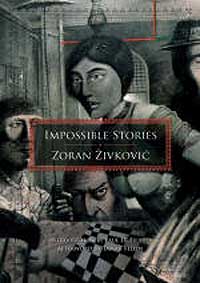 Do we have a canon of contemporary European literature? It’s hard to imagine so, because no two European countries can draw on exactly the same sources. The view of the canon from France might include a Spanish novel that has been translated into French but not English. The Germans might be all over a Danish novel that the rest of us will never see. I might put the best of Zoran Zivkovic’s work forwards for inclusion, but this would make no sense to readers in Italy, who have yet to receive any of it in Italian.
Even where the potential for translation grants has been thoroughly exhausted, our national views of European literature are separated by cultural differences; different things matter to different races. This means that any nation’s view is refracted through not one but two separate prisms, angling certain rays into oblivion and focussing others more sharply. For a writer to claim a place in any European canon, there needs to be enough universality in his themes to angle his light directly. (Keep reading …)
