

S R Mastrantone on ‘Something Unfinished’
Thursday, 21st November 2013.
Here’s S R Mastrantone to tell us about the inspiration behind his short story ‘Something Unfinished’.
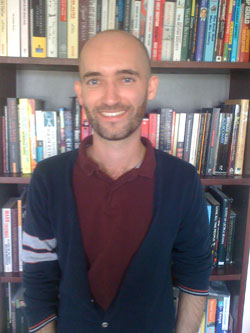 As well as being about scepticism, academic pomposity, and the peculiar sort of understanding that can develop in father-and-son relationships, ‘Something Unfinished’ is about memory. So it’s fitting that I nearly forgot about this story after I first came up with it.
I could remember the punch line: an elderly couple literally run out of things to say to one another. But when I told this to a very close friend of mine whose opinion I valued, he said: “It sounds rubbish. That wouldn’t happen.” I agreed, and I couldn’t believe I’d ever thought there was a story in it. Years later, when I was first going out with the amazing woman I recently married, I finally remembered the setup.
In the early days of our courtship, we talked to one another like long-lost friends who had finally been reunited, but only had a day or so to spend together before being separated again. A conversation would begin, and then halfway through it would lead to another equally interesting conversation, the original conversation forgotten about. For example:
“Yes, I eat breakfast too! That’s amazing. I used to really like Weetabix but now I’ve switched to a milkshake and berries.”
“Really? Wow. Did you know they make Weetabix in Kettering? I once went to a talk about Johnny Cash there and I could smell Weetabix all day?”
“That’s amazing. Did you see the episode of Columbo Johnny Cash starred in?”
“Yes, I also like the one with Patrick McGoohan.”
“Patrick McGoohan. Wow, which one, there are a few? I went to a Paddy Gooey film-festival in Portmeirion.”
“Portmeirion! I used to…”
Days later I would suddenly remember that we hadn’t finished the conversation about Breakfast. Or about Kettering. Or even, most importantly, about Columbo. It started me thinking about all those unfinished conversations, floating about miserably in some half-finished-conversation purgatory. And I wondered: could the strength of our relationships with other people be measured by the number of conversations with them that were never finished? The better the friend, the more conversations. Perhaps the incompleteness draws us back to them again and again as we search unconsciously for an end to those discussions.
 I don’t really believe unfinished conversations are at the heart of our relationships with other people, but the idea that someone might believe this reunited me with my old story idea about the couple who had literally run out of things to say to one another. What would happen once all those conversations floating in limbo are finally completed, as they might over a married lifetime? And, would the silence between the two people be the result of some hitherto undiscovered truth about the universe and the human condition? Or would the silence come from the couple’s shared belief in this strange truth, bringing with it all the baggage and askance glances that strange beliefs do?
What really happened between Ivy and Harry is a mystery to me, although I trust Eric’s reaction at the story’s conclusion. But just in case, when it comes to the relationships I am fond of, to err on the side of caution, I occasionally end discussions before they reach their natural—
You can read ‘Something Unfinished’ in the latest Fiction Desk anthology, Because of What Happened, available now in paperback, iTunes, & Kindle formats. His previous story with us, ‘Just Kids’, won the Fiction Desk Writer’s Award. Read about ‘Just Kids’ here.
Matt Plass on ‘Invisible Them’
Tuesday, 19th November 2013.
Here’s Matt Plass on how he came to write his short story ‘Invisible Them’.
Hope for the best and prepare for the worst, the saying goes. ‘Invisible Them’, my short story in Because of What Happened, asks what happens when you prepare for the worst, but the worst is worse than you could have imagined.
 The story comes from a recurring thought I’ve had since I first saw troops boarding planes for the second Gulf war. Whenever the news shows footage of our departing soldiers, I wonder whether the families left behind – particularly the parents, and then particularly the mothers – are able to both hope and prepare, or whether they cling to the former and refuse to entertain the latter.
I can’t imagine how a parent could absorb that level of anxiety. It must be like living in a house built directly over a fault line: constant tremors that rattle the crockery, the occasional quake that pulls down a wall and exposes your world to the street. And if the worst does happen – your son or daughter doesn’t come home – would the months of waiting, hoping, rationalising, begging … would all that conscious (or unconscious) preparation soften or amplify the impact?
Another question. People being what they are – drawn to sadness and easily intoxicated by their own tragedies – would those parents waiting for news find themselves sometimes dwelling on the worst possible outcome? Would they picture themselves bereaved? Rehearse how they’d do grief? Indulge in an imagined descent into alcoholism and rage; some violent and implausible revenge?
Perhaps, but so what? That house on the fault line is stronger than it looks, with foundations cemented in duty and honour and service. If the worst happens, at least those parents can take small consolation from the pride of sacrifice.
Unless…
A recent news item featured portrait photographs of three serving soldiers, their faces pixelated beneath their dress uniform, to disguise (but not to protect) their identity. All three stood charged with the slaughter of unarmed civilians in Afghanistan; they had been discharged from their units, repatriated, and now faced trial back home. It made me think of the parents left behind, and the possibility that while they had prepared for the worst, there was something worse out there that they couldn’t have imagined. Something dishonourable. Something that could destroy the crutch of pride and sacrifice, and in doing so leech sympathy from friends and acquaintances, leaving them ashamed and alone. Could that, perhaps, be worse than the news that their loved one died in combat?
But hold on a minute…
They did something terrible, but at least those boys are alive. And aren’t they victims, too? There’s post-traumatic stress and psychological trauma to be considered. Facts live just below the surface of Google that place the blame firmly elsewhere. More servicemen took their own lives after the Falklands “conflict” than died in the fighting. Today, the emotional and psychological fallout from wars in Iraq and Afghanistan costs countless lives, marriages and friendships. Support from the MoD is pitiful; our service men and women are chewed up and spat out by the military machine. No wonder some of them explode like faulty grenades. Did I mention that those boys are alive? As a parent, you can visit them and you can hold them, even if it is across a prison table.
Who knows what the worst is that can happen? ‘Invisible Them’ ends with bad news about to be delivered to the parents of a serving soldier. I think the real story is what happens next.
‘Invisible Them’ appears in the latest Fiction Desk anthology, Because of What Happened, available in all good bookshops, on Kindle, and through iTunes.
Announcing the winner of the Fiction Desk Writer’s Award for Because of What Happened
Tuesday, 12th November 2013.
It’s time to announce the latest winner of the Fiction Desk Writer’s Award.
The Writer’s Award is given for the best story of each anthology, as voted by our contributors. Nobody else gets a vote, meaning that the award really does represent the judgement of the writers themselves; after all, they’re the ones who best know what makes a good short story.
Today’s award is for the best story in Because of What Happened, our fifth anthology. It was a tough contest, with fifteen stories to choose from, including Tania Hershman’s already-prizewinning story from our 2013 flash fiction competition. But we have a winner…
 I’m delighted to announce that our writers chose Cindy George’s story ‘The Coaster Boys’ as the winner of the Fiction Desk Writer’s Award. Congratulations Cindy!
Cindy George has written a post for us about the inspiration behind her story; you can read her post here, and you can read the story itself in Because of What Happened, out now in paperback, Kindle, and other ebook editions.
Cindy George on ‘The Coaster Boys’
Tuesday, 12th November 2013.
Here’s Cindy George to tell us about the inspiration behind her short story, ‘The Coaster Boys’.
Years ago, I was working on an advertising campaign for a theme park. In the course of my online research into the target market, I blundered into the world of ride and theme park enthusiasts. Immediately it was obvious that this was exactly the same kind of community I knew well from music fandom – the injokes, the nicknames, the disturbingly detailed knowledge of trivia, the bickering. It was fascinating to see the parallels when outwardly these people and I had little in common.
It’s a kind of kinship repeated all over the place, from LARPers to Whovians to rail enthusiasts. All the same and all largely oblivious of each other, these constellations of people like extended families who, whatever their individual differences and however fierce their infighting, will close in if one of the group is threatened.
Last year, I’d almost forgotten about the theme park enthusiasts. I’d been thinking about loss, and how hard it is for a writer to make sense of. I wanted to write a story that wasn’t about “coming to terms” with death, but about the ownership of loss, and how grief is shared out. I also wanted it to be about life- so often, if someone dies young, their life becomes defined by their death, and this seemed like something that was worth trying to explore and address.
Then I was lucky enough to see Jon McGregor talk and read from his collection This Isn’t The Sort of Thing That Happens To Someone Like You. His swoops from exuberance to horror and back to the mundane gave me a eureka moment – my “lost friend” character was one of the roller coaster fans I’d been reading about! The theme park environment was the perfect metaphor for the giddy thrill of being part of a gang, mixed with the sickening terror of terminal illness.
Of course this plunged me into a swamp of research, and made me briefly wish I’d chosen a more familiar setting – every bit of technical information mentioned in passing had to be painfully extracted from the depths of the internet. The relationships between the boys, though, were something I already understood, like anyone who’s been a member of something, and once I knew who they were, the characters wrote their own story.
Jas’s family stand off to the side a little. Their tragedy is great and incomprehensible, but I hoped that looking at them through the eyes of someone who’s outside the family circle might allow us to see their situation more clearly, in the same way that a driver can only see his own car when he gets out of it.
It was a hard story to end. It wanted to end with Jas’s friends scattering his ashes, but that set off my sentimentality-alert siren. The narrator’s dream that does end it is a heavily adapted one of my own. It was an incredibly vivid dream in which a much-missed friend returned to us, purely to have a good laugh at us and our earthly squabbles and dramas. I woke feeling sad but optimistic, and I like to hope the reader might feel a tiny echo of that on finishing the story.
‘The Coaster Boys’ appears in the latest Fiction Desk anthology, Because of What Happened, available in all good bookshops, on Kindle, and through iTunes.
Tim Lay on ‘The Patter of Tiny Feet’
Friday, 8th November 2013.
 Here’s Tim Lay to tell us about the inspiration behind his story ‘The Patter of Tiny Feet’, which appears in our current anthology Because of What Happened, available now in all good bookshops…
When I was a kid, we lived on a smallholding in the country and kept goats and chickens. They say if you have chickens then you have rats. Sometimes the rats would get into the food bins. I can still remember the high pitched shrieking of a rat that got cornered (and battered) in one of those bins.
I don’t like rats. Over the years I have encountered rats all over the world. Jungle rats nesting in the palm roof of a Gambian beach shack, dirty New York street rats jumping out of rubbish bags, rats the size of puppies strutting down the landing of a Mumbai hotel…
So that was the starting place for ‘The Patter of Tiny Feet’. An inherent fear. But it was an actual infestation which gave me the inspiration.
In the past few years I have returned to country living. One spring, after a particularly mild winter, we had a colony of rats set up behind our chicken coop. You know you have a rat problem when you see them foraging in broad daylight.
I live with 3 vegetarians. Poison was deemed a definite no. So it was at that point I started researching alternatives. A method vouched for by the traditional Devon farmer was to pump petrol down the rat hole and light a match. I heard about another farmer who would split a bag of feed in the middle of his farmyard, wait for rats to swarm and then let blast with both barrels of a shotgun.
The price of petrol and a lack of a shotgun precluded me from taking these options!
It was my brother who told me about the ‘cannibal rat’. He claimed it was a Devon country practice, but research later placed it to South East Asia. To find out more, you’re going to have to read my story in Because of What Happened… The cannibal rat did not solve my rat problem. But it was a great hook for a story.
The vegetarian bloc in my family gave me such a hard time about wanting to get rid of those rats. We had arguments about it. One time I told my girlfriend she was being an ‘unrealistic hippy.’ In the end those rats overstepped the line. They started eating the organic tomatoes in the poly tunnel. It was at that point that even the vegan’s tolerance snapped, “Do what you have to do,” my girlfriend said. “Just don’t tell me how.”
And that’s when the story came together. The conflict of ideals and reality. The solution may be more organic but does that make it any better?
— Tim Lay
2014 Flash Fiction Competition is open now!
Tuesday, 1st October 2013.
The 2014 edition of our annual flash fiction competition is open now.
This year, we’ve boosted the first prize to £200, and reduced the maximum word count slightly to 1,000 words. (We thought that 1,250 words may be a little long for flash fiction.)
Entry fees are the same as last year, and the deadline is midnight on 31 January 2014 (UK time).
For more information visit our Flash Fiction Competition pages. You’ll find the full terms at the bottom of the entry forms.
We had a great response to last year’s competition – see the winning entries in our anthology Because of What Happened – so I’m really looking forward to reading this year’s entries.
Announcing the winners of the 2013 Ghost Story Competition
Thursday, 1st August 2013.
 It’s time to announce the winners of our 2013 Ghost Story Competition.
We had a fantastic response, especially given that the competition is only in its first year. Listing only the two winning stories wouldn’t really do justice to the strength and variety of entries we received, so we’ve decided to add a shortlist to our announcement.
The winner of the £500 first prize is:
- ‘Guests’ by Joanne Rush
The winner of the £100 second prize is:
- ‘At Glenn Dale’ by Julia Patt
The ten shortlisted stories are:
- ‘Half Mom’ by Jason Atkinson
- ‘The 25th Caprice’ by Linda Brucesmith
- ‘Tom’ by Oli Hadfield
- ‘Washout’ by Matthew Licht
- ‘No Good Deed’ by Amanda Mason
- ‘In the Walls’ by Miha Mazzini
- ‘A Whole Bloody Century’ by Jonathan Pinnock
- ‘Journeyman, a ghost story’ by Eloise Shepherd
- ‘Chalklands’ by Richard Smyth
- ‘Old Ghosts’ by Ann Wahlman
Thank you again to everybody who took part. The two winning stories will appear in an upcoming anthology, and hopefully we’ll be able to feature some of the shortlisted entries too.
We’ll certainly be running this competition again next year, so stay tuned for details of that. (We’ll also be running our flash fiction competition again this autumn.)
James Benmore on writing Dodger #2: the voice of Dodger
Thursday, 16th May 2013.
James Benmore’s first novel, Dodger, features the return of the Artful Dodger from Oliver Twist. Last month, he wrote for us about the appeal of the Dodger and why he chose to bring him back. This month, he talks about creating the voice of Dodger, and how the character might have come to write a book in the first place.
 Whenever Charles Dickens wrote in the first-person, he tended to employ a particular type of narrator. These are often virtuous, seemingly middle-class voices who begin their own stories with an account of an impoverished upbringing blighted by some atrocious adult. This can be a cruel step-father perhaps, or a bullying older sister, and this dark parent-figure makes their very childhood, and often the first few chapters of the book, a bit of a misery.
Such hard luck stories — or what Holden Caulfield from The Catcher in the Rye bluntly described as “all that David Copperfield kind of crap” — invariably mark the start of a rags-to-riches plot. The narrator describes how, through hearty Victorian resilience, honest labour and a few well-timed coincidences, they manage to escape from this unfortunate start in life and enter into a higher, more genteel social spectrum form which they are now writing their own history.
Often the narrator will be a stand-in for Dickens himself, like the semi-autobiographical Copperfield who shares many of his author’s life experiences as well as his reversed initials, or Pip from Great Expectations whose descriptions of his own youthful snobbery and self-centeredness can sometimes be read as though Dickens is taking himself to task.
Occasionally Dickens may adopt the voice of someone very different from himself, such as the modest, female perspective of Esther Summerson in Bleak House. But all his major narrators have something in common: they are all, at their hearts, morally pure. They possess flaws certainly but it is impossible to conceive of Dickens handing the bulk of any novel over to a scheming, unrepentant rotter to narrate. He may give a rough criminal like Magwitch a few pages of contained narration nested within Great Expectations but even Magwitch doesn’t seem so bad by that point in the story.
No, if we want to read a novel narrated by a classic Dickensian villain then we just have to write it ourselves.
This is the main idea behind my novel Dodger. I tried to write the book that I wanted to read: one in which Jack Dawkins, a very different type of character from the Dickens canon, is allowed to put pen to paper and tell the story of his own life with as much freedom as David, Pip or Esther would. I was interested in what such a book would sound like, in what dialect would be employed and what different moral perspective Dawkins could bring to the familiar Victorian surroundings.
I did not want Dodger to spend much time relating his own account of the events of Oliver Twist and this was largely because as a character he is present at too few of its key scenes. Instead I wanted him to tell us about what happened to him next, after he was transported to Australia, and to describe his discovery at what fate befell Fagin and company upon his return six years later. Unlike those other narrators I did not imagine that Dawkins would be inclined to present his early childhood as a sob story. In fact, I suspected that he would look back upon his old life with Fagin and his large gang of boy pickpockets as having been a very happy time, a perversely idyllic childhood, and one that was rudely interrupted by the cruelty of the law.
The principal challenge in writing any first-person novel lies in getting the voice right, and casting Dawkins in such a role presented immediate difficulties. How literate would someone from his background even be? Dickens shows that the criminal contingent of Oliver Twist are all avid readers of The Newgate Calendar, a cheap periodical that detailed the arrests and executions of various villains throughout the capital, so we can safely assume that Dawkins possesses a decent enough level of literacy to build upon. He then spends six years in an Australian penal colony where, I like to imagine, he would have been given access to a large enough library that could have inspired a love of words and storytelling within him. Dawkins is a thief in all things and he is someone who, when he encounters the possessions of rich men, itches to take them for his own. This compulsion would extend itself to reading — or so I reasoned — to the books, stories and words of wealthy society as much as to their valuables.
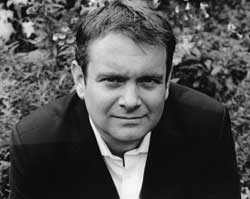 This of course does not mean that he would speak in the same pure-bred English that Pip masters after his years of education away from the forge. Nor do I truly think that Dodger would want to speak like that. Instead the voice that I developed when I began writing the first chapter is a mixture of the sort of literary language that I feel he would have met in fashionable novels, the archaic slang of Victorian London and a persistent bad grammar that he would wear as a badge of his class.
Dawkins the narrator is perfectly capable of mimicking the language of the middle-class when writing their dialogue so it follows that his own use of cockney could be a deliberate choice he is making. I have always known that the Artful Dodger is someone who covets the comforts, possessions and privileges of the high-born Englishman, but that doesn’t mean that he wants to be one himself. He does not aspire to be accepted into their world in the same way that David Copperfield or Pip do. Dodger just wants to steal what rich people have and keep it for himself, and I needed him to speak in a voice that communicates that difference.
Another aspect of writing this first-person novel that concerned me was the question of why exactly the Artful Dodger would be scribbling all this down in the first place. Throughout my book and its upcoming sequel he admits to all sorts of pickpocketing, burgling and other shameful behaviour and there is hardly any of the usual contrition in his narrative voice that you might associate with a reformed sinner like Moll Flanders. Dodger isn’t sorry for his crimes at all, in fact he’s boasting about them.
I often imagined when writing the book that Dawkins the narrator wasn’t much older than the Dawkins in the story, as if he’s composing his autobiography just a few short years later in his mid-twenties and not wanting to apologise for any of it. I never have Dawkins explain in the novel why he would be writing a book that could incriminate himself so disastrously because I want the reader to wonder about that themselves. But one thing is certain; this is not a work he can ever publish within his own lifetime.
But why should that stop him? Sometimes people write just for the joy of it or because they have a story in them that needs to come out. And just because Dawkins is barred from enjoying any real literary success while alive does not mean he isn’t subject to that same storytelling impulse that we find in those other Dickens creations like David Copperfield or Pip. Perhaps Dawkins, despite occupying a very different moral space from those other characters, has as much as in common with his creator as they do.
— James Benmore
Read James’s first post about writing Dodger here.
Dodger is out now, published by Heron Books and available in hardback from all good bookshops, as well as the usual range of ebook formats. (Read the first chapter on Amazon.) James Benmore is already working on a sequel.
You can also read James’s award-winning story ‘Jaggers & Crown’ in our anthology All These Little Worlds.
Colin Corrigan on ‘Wonders of the Universe’
Wednesday, 15th May 2013.
Here’s Colin Corrigan writing about the origins of his story ‘Wonders of the Universe’, which appears in our latest anthology, Crying Just Like Anybody.
 Some day a real rain will come…
Travis Bickle said it. Noah said it. All over the world, people have been saying it since storytelling began. There’s something religious about a flood that will rinse away all evil, and leave us with a fresh start. A clean world, hoping to forget its past…
About eighteen months ago, my house was flooded, my living room, kitchen and bathroom submerged under nearly three feet of sewage-stained water. It really wasn’t the end of the world for me — I rent, so the repair costs were borne by my landlord, and my housemates lifted most of our valuables out of the way before they were claimed by the waterline — but it felt dramatic, even momentous, all that rain, nature’s power reaching up at us through our very floorboards. It was probably inevitable that I would one day soon try to shove the experience into a story.
‘Wonders of the Universe’ began, though, as a story about science, not religion. Kevin and Edel start watching a DVD box set of Brian Cox’s popular BBC series, after they are advised by their marriage counsellor to do more things together, and the experience encourages them to analyse their own lives, and try to deduct what they really want from the world.
Science is a thing we humans have been doing for a while now, to try to understand phenomena that had previously only been explained by myths, legends, and religious doctrines. We’ve managed to figure out why the sun rises, why the sky is blue, why the earth sometimes quakes. We’ve discovered cells, molecules, atoms, subatomic particles, and made all sorts of technological advances.
Lately, though, it’s all gotten a bit out of hand. There’s a story about a reporter who approached a Professor Eddington of Cambridge, who had translated Einstein’s work, and asked him if it were true that apart from Einstein himself only two people could understand his Theory of Relativity. Professor Eddington looked at the reporter and said, “I wonder who the third person is.” Fast forward another century or so and we’ve got string theory, wave-particle duality, dark matter and hidden dimensions. It has gone far past the point of making the world easier to understand. It’s made the task damn near impossible.
So I’m writing the story, it’s getting longer and longer and more and more complicated, and things are just getting worse for Kevin and Edel. It’s becoming obvious that bringing the Wonders of the Universe into their living room was a really bad idea to begin with.
Because the Universe is, unfortunately, like Brian Cox, and your options are limited.
Like Kevin, you can weigh yourself against his knowledge, his achievements, his rockstar lifestyle, and understand that your own life is embarrassingly insignificant and underwhelming.
Or, like Edel, you can fall for his mellifluous, Mancunian whispers, his soft, floppy hairdo, his sheer goddamned enthusiasm, but then realise that he’s unattainable.
Or, like me, you can eject the DVD, flick back to the Bible Channel for a moment, and wash all my characters’ troubles away with a flood scene at the end.
Some critics, like Hollywood scriptdoctors and Aristotle, would accuse me of lazy storytelling, argue that I should construct my plots through a chain of causes and effects towards a conclusion where my protagonist earns his resolution through his own decision making and actions. And maybe they’re right.
 But in my defence, Aristotle didn’t know about entropy. And: sometimes these things really do happen, interventions of fate or coincidence that change the direction of our lives. And: sometimes it just rains so much the sewers can’t take it. And: sometimes that’s all we can hope for.
— Colin Corrigan
‘Wonders of the Universe’ appears in our latest anthology, Crying Just Like Anybody, available in paperback and ebook editions. We published another of Colin’s stories, ‘The Romantic’, in All These Little Worlds Read Colin’s thoughts on writing ‘The Romantic’ here.
James Benmore on writing Dodger #1: the Artful Dodger and the first Dickensians
Monday, 15th April 2013.
This month we’re celebrating the publication of the first novel from Fiction Desk favourite James Benmore. Dodger (published by Heron Books) revisits the character of the Artful Dodger from Charles Dickens’ Oliver Twist, seeing him return to a much-changed London six years after transportation to Australia. But he’s not yet a free man…
Dodger is a hugely entertaining book, combining 21st century storytelling with a genuine passion for the original books. In the first of two posts for The Fiction Desk, James Benmore writes here about how he was drawn to the Artful Dodger in the first place, and why he feels there is more to say about the character.
I’ve always envied Dickens’ earliest readers. The ones that discovered him back in the early 1830s when he was still writing journalism and sketches under the pseudonym of Boz. The ones who read The Pickwick Papers in a time when it was first being published in shilling instalments — not because it was written by some grand old man of literature but because it was fresh and funny and someone fashionable had recommended it to them.
Those hip metropolitans who would have been dropping the name of Charles Dickens — the sparkling young author who you simply must read — all over town and quoting his choicest bits to each other while their less literate friends listened on glumly because they weren’t getting any of the references to Sam Weller, Joe the Fat Boy or Dingley Dell. I’m talking about the long-time fans, the ones who were there at the the start and liked him even before he went all mainstream with The Old Curiosity Shop a few years later. Because, lets face it, if you didn’t know who Charles Dickens was back in 1836 then you probably weren’t someone worth talking to. You were, not to point too fine a point upon it, a bit tragic.
For these early readers — the first Dickensians we’ll call them — then the summer of love must have taken place between the February of 1837 through to the November of that same year. This was the magic period when Dickens, still only 25, was serialising his first two novels simultaneously as the final instalments of Pickwick overlapped with the opening chapters of Oliver Twist. These two novels could not be more starkly contrasted, the first being all lightness and comic fizz while the second is an angry, murderous melodrama, and they must have struck the first Dickensians as a stunning one-two punch.
One of the great pleasures of reading early Dickens is the wonderful show-offery on display: it’s as though the new author is even impressing himself with how talented and wide-ranging a storyteller he can be, and by what brilliant things he can make words do. Neither is a perfect book — Pickwick keeps spinning off down random narrative byways and Dickens is clearly making the plot of Twist up as he goes — but there is a joyous free-wheeling energy to both and this is something that fades a little in his subsequent work. Literary scholars may correctly identify later novels such as Bleak House and Great Expectations as more technically accomplished, important and mature but, as any first Dickensian will tell you, there is just something cool about the early stuff.

Which brings me to Jack Dawkins, or the Artful Dodger as the criminal community insist on calling him. For me, Dawkins is the very epitome of everything that is great about early Dickens. He makes his first appearance in chapter eight of Oliver Twist, right in the middle of that golden period, and in just a few short pages he steals the whole scene out from under Oliver’s virtuous nose. He is the very voice and swagger of a young urban London with his cockney slang and streetwise savvy and he is not someone I can imagine the author creating later in his career. Dickens went on to present his readership with an array of criminal grotesques and middle-class bounders but the Dodger represents something not commonly found elsewhere in the Dickens canon: attractive lower-class rebellion.
We aren’t invited to be disgusted by Dawkins in quite the same way that we are with Fagin and Noah Claypole; in fact there are aspects of his character that we even find ourselves drawn to. After all, what reader hasn’t fantasised about how they would fare if Dawkins was to take them out on a pickpocketing spree as he does with Oliver. About how artful we would prove ourselves to be, and whether or not Dodger would like us.
Dickens seems to have been inspired to create the character back when he was working as a court reporter. He had already written a non-fiction scene which can be found in the ‘Criminal Courts’ chapter of Sketches by Boz in which a lad of thirteen is shown being tried at the Old Bailey and proceeds to creates chaos in court with his accusations of police corruption, unlikely alibis and calls for imaginary witnesses. This clearly inspired Dodger’s final scene in Oliver Twist, when he is himself sentenced for stealing a silver snuff box from an unnamed gentleman.
Like his real-life model from ‘Criminal Courts’, Dawkins doesn’t sniffle in the stand and beg to be spared: he’s far too mischievous and unrepentant a character for that. Instead he performs for the benefit of the spectators and grins in the faces of the officers who drag him away for transportation. And it is this irrepressible comic spirit which makes Dawkins such a light relief in an otherwise dark novel. He isn’t punished for his criminality as severely as Fagin, Bill or Nancy are. Neither does he undergo an unconvincing change of heart like his friend Charley Bates does when he suddenly informs on Bill Sikes in the final act. Dodger is just allowed to be Dodger and — by mid-Victorian standards — he pretty much gets away with it.
Except of course he doesn’t, and all because of that sticky snuff box. After his sentence Dodger is removed from the action of Oliver Twist just before things turn really nasty for the criminal contingent. Perhaps this is because Dickens wanted to spare the child from the bloody end he had in store for the rest of them, or maybe it was because he didn’t want Dawkins upstaging Twist any further. Either way, I think most of Dickens’ readers — be they first Dickensians or those of us who have read the book 170 years later — must have felt disappointed that Dawkins is never mentioned again.
There’s a real sense that there was more fun to be had with the boy thief if only Dickens had wanted to have it, and I’ve often wished that the Artful Dodger could have been like Falstaff: a disgraceful yet lovable recurring character. I like to imagine him crossing over from the pages of Oliver Twist and into those of the author’s other novels, especially The Pickwick Papers during that time when they were both still running. Imagine what a surprise it would have been for those first Dickensians if he had suddenly appeared picking Mr Pickwick’s pocket in an installment of that book and then was next seen back in Oliver Twist being tried for that very crime, before continuing to show up at some point in every other Dickens novel that followed. It would have blown their Victorian minds.
And it was this thought that inspired me to write my first novel Dodger, in which Dawkins narrates what happened to him next in his own crooked, unapologetic voice and even interacts with people from other Dickens works. I wanted him to be our guide around the fascinating city to which he returns six years after his transportation, the world we are still calling Dickensian London. I don’t know if literary scholars will like my book; in fact I very much doubt it. But then I don’t think I really wrote it for them. I like to think that I wrote the book for the real fans, the ones who were there at the start. I like to think that I wrote the book for the first Dickensians.
— James Benmore
Dodger is out now, published by Heron Books and available in hardback from all good bookshops, as well as the usual range of ebook formats. (Read the first chapter on Amazon.) James Benmore is already working on a sequel. The novels are written in the first person, and in another post on our blog, James talks about reconstructing the voice of Dodger himself.
You can also read James’s award-winning story ‘Jaggers & Crown’ in our anthology All These Little Worlds.
