
Twitter Tips for Authors
Thursday, 15th October 2009.
More and more authors, from unpublished novices to international heavyweights, are getting involved with Twitter. If you’re planning to join them, here are some tips for good author tweeting:
Setting up your account
- Be yourself, not your book. In the short term, it may seem like a good idea to set up your Twitter account as the title of your book, but it’s probably better to use your own name instead. There are two reasons for this:
- People are more likely to respond to a person than a book – it feels less like advertising, and it’s more natural to build a relationship with a person.
- Think long term. If you do get followers for this book, what happens when your next one comes out? Do you change the account details, confusing people, or open a new Twitter account for the new book, and start again from scratch? Tweet as yourself, and your account can grow with you through your whole career.
(You can still promote your latest book as part of your identity – in your profile image, as the background image on your feed, with a mention in your bio line.)
- Provide a bio, url, and profile photo. Before you tweet your first tweet, take a moment to compose a good line to go in your bio, just to let people know who you are. It may not seem like much, but a single sentence can change you from an anonymous twitterer into an actual, live person worth connecting too. The profile photo is important too, as it helps establish your identity. Finally, don’t forget to add a link to your blog or Website.
- Don’t follow anybody until you’ve made a few tweets. When you follow somebody, they’ll get an email. They’ll probably then come and have a look at your feed to see who this new follower is. If there’s nothing there, they’ll go away and forget all about you. If you’ve posted a few interesting tweets, they’re more likely to follow you back, or at least take note.
Are book blogs and novellas made for each other?
Sunday, 20th September 2009.
A while back, I wrote a piece on The Fiction Desk about the kinds of books that I thought made ideal fodder for book blogs. Something that struck me then, and has become more important to me since, is the length of books.
While there’s no point in talking about some kind of ideal length for fiction (Q. How long should a book be? A. Exactly as long as it takes), I do wonder whether novellas hold a certain appeal specifically for book bloggers. (Keep reading …)
War on the Margins by Libby Cone
Monday, 14th September 2009.
Many of the books that have crossed my desk lately have involved some kind of attempt to combine didactic fact with fiction: not just historical fiction, but books with a real desire to offload information onto the reader. Maybe “edutainment” based on real-life events or people makes for easy marketing, or maybe authors just aren’t active enough, and must find the truth of their adventures in history books rather than their own lives. War on the Margins, Libby Cone’s debut novel about the Jewish experience of the Nazi occupation of the Channel Islands, takes its own approach to the challenge. It’s successful in some ways but less so in others. (Keep reading …)
The Red Wheelbarrow: Profile of a Paris Bookshop
Friday, 11th September 2009.
 Penelope Fletcher Le Masson comes from “an island off an island off Vancouver”. She seems to have been born with a dedication to selling books: before her twentieth birthday, she’d persuaded her father to refit an old henhouse as a moveable bookstore, a brightly painted gyspy caravan which she stocked with second-hand books and set up near the only other store on the island. “But don’t write that, will you?” she asks, blushing. I hope she lets me: she may be shy about her youthful entrepreneurship, but there’s still a bookstore on the Hornby Island site today (though the henhouse is gone), and in Paris, half a planet away, she now runs one of the nicest bookshops I’ve ever visited. (Keep reading …)
The Impossible Stories of Zoran Zivkovic
Wednesday, 9th September 2009.
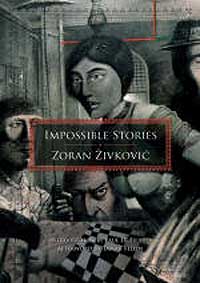 Do we have a canon of contemporary European literature? It’s hard to imagine so, because no two European countries can draw on exactly the same sources. The view of the canon from France might include a Spanish novel that has been translated into French but not English. The Germans might be all over a Danish novel that the rest of us will never see. I might put the best of Zoran Zivkovic’s work forwards for inclusion, but this would make no sense to readers in Italy, who have yet to receive any of it in Italian.
Even where the potential for translation grants has been thoroughly exhausted, our national views of European literature are separated by cultural differences; different things matter to different races. This means that any nation’s view is refracted through not one but two separate prisms, angling certain rays into oblivion and focussing others more sharply. For a writer to claim a place in any European canon, there needs to be enough universality in his themes to angle his light directly. (Keep reading …)
Big ships turn slowly: why large publisher websites don’t work
Friday, 21st August 2009.
A few months ago, I wrote several posts reviewing publishers’ websites. Essentially, the same problems arose again and again: the inability to target a specific market, poor search engine optimisation, a lack of attention to the user experience, a lack of original content.
I didn’t run the series for long because the repetitiveness made it boring to write, and I’m sure it wasn’t any more fun to read. However, I looked at many more sites than I wrote about, and I came to some general conclusions that may be worth sharing. (Keep reading …)
Ramsey Campbell, Probably
Tuesday, 4th August 2009.
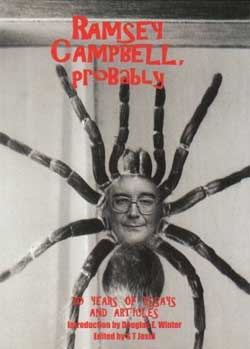 When exactly did horror fiction become unacceptable? Is there a year, perhaps, a specific date after which anything supernatural becomes the exclusive possession of the recluse, something to occupy spotty teenage boys until they discover spotty teenage girls?
I think we’re all agreed that Frankenstein and Dracula are allowed on any bookshelf. Likewise, nobody would bat an eye if they spotted the spine of an M.R. James or the ghost stories of Charles Dickens; these snuck into the mainstream through a door that somebody left open at Christmas. H.P. Lovecraft is permissible for the sake of nostalgia, and Poe, well, he wrote poems and stories set in France, so he must be okay. Shirley Jackson’s a woman, so what she writes can’t really count as horror, and anyway, she’s a Penguin classic. Horror novels aren’t published by Penguin Classics: they’re printed by suspicious-sounding paperback imprints you’ve never heard of, they’re written by people with names like Hank Buckweather; they have titles like The Rats from the Pits of the Blood Demon and covers that feature skulls with a serpent coiling out of one eye socket and a scorpion scuttling out of the other. There will also certainly be blood… (Keep reading …)
The Booker Prize Longlist 2009
Wednesday, 29th July 2009.
Another year, another Booker. After last year’s fun but not particularly informative blog roundup, I thought I’d take another crack at looking at what bloggers have said so far about the Booker longlist. (For my own part, I own about five of these, but have read none of them. Yet.)
Here goes… (Keep reading …)
Stop discounting before discounting stops publishing
Wednesday, 1st July 2009.
I’ve been working with books, and blogging about them, for a few years now, and reading them for a little longer. There’s something that I’m finding increasingly troubling: the majority of the books I purchase to read, or receive for review, shouldn’t have been published. (Keep reading …)
City of Strangers by Ian MacKenzie
Thursday, 18th June 2009.
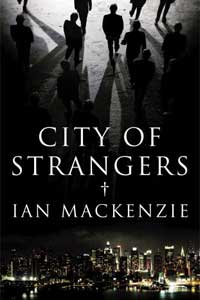 I’ve written in the past about the strengths and weaknesses of using the present tense in fiction. At times it can be very effective, but it’s a snappy, percussive tense, ill-suited to more ponderous prose. Ian MacKenzie‘s use of the present in City of Strangers is symptomatic of an overall discord, a clash in a novel that doesn’t seem sure whether it’s a fast psychological thriller or a Saul Bellow-style portrait of a man in his city.
The story follows a week in the life of Paul Metzger, a failing writer, still smarting from a recent divorce and a long-term breakdown in his relationship with his brother. His father, an infamous Nazi sympathiser in his youth, is dying in hospital, while Paul walks the streets of New York. When he rescues a foreign boy from a street beating, he finds himself the target of one of the assailants, who begins following him around the city. (Keep reading …)