
Sum: Forty Tales from the Afterlives by David Eagleman
Monday, 15th June 2009.
 Sum is a collection of forty vignettes describing possible afterlives, written by neuroscientist David Eagleman and collected in a compact and attractive edition by Canongate. The stories, an average of 2-3 pages each, are mostly presented in the second person, describing “your” death with irony, wit and occasional poignancy.
In the afterlife, you discover that your Creator is a species of small, dim-witted, obtuse creatures. They look vaguely human, but they are smaller and more brutish. They are singularly unitelligent. They knit their brows when they try to follow what you are saying. It will help if you speak slowly, and it sometimes helps to draw pictures. At some point their eyes will glaze over and they will nod as though they understand you, but they will have lost the thread of the conversation entirely.
from ‘Spirals’
Talk of the Town by Jacob Polley
Tuesday, 9th June 2009.
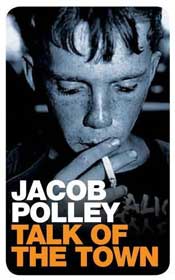 New from Picador, Talk of the Town is the first novel from poet Jacob Polley. It’s a coming-of-age tale set in Carlisle during the summer of 1986, and narrated in vernacular by schoolboy Chris Hearsey. His friend Arthur, never the most stable of kids, has gone missing, and Chris sets out to try and find him:
There’s nee mugshot, but I’ve got one already, me own movin clip of Arthur reachin down ter give us a hand up off the deck, the sun comin out from behind his head, dazzlin away his face. I whip the paper shut and shove it back under me bed, further back than the empty mug, behind the shoebox. I get ter me feet, wipin the sweat off me palms on me jeans. There’s nowt else fer it. I reckon I have ter gan and see Gill Ross, cus it’s her who might know where Arthur is, cus of what fat Booby said yesterday on the Arches.
I shut me bedroom door softly affter us.
Back to the Coast by Saskia Noort
Saturday, 6th June 2009.
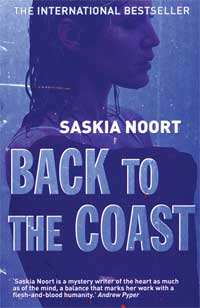 Once I’d decided to start reading a little more crime fiction, it could only be a matter of time before I encountered crime publishers Bitter Lemon Press. Their current lead title, and perhaps the best place to start, is Back to the Coast, a thriller by Dutch author Saskia Noort. (Keep reading …)
Postscripts #18 from PS Publishing
Monday, 1st June 2009.
While I was examining PS Publishing’s website a few weeks ago, I decided to subscribe to their flagship quarterly publication, Postscripts. A keen reader of horror as a teenager, I’m pretty out of touch with what’s happening in the genre today, and their magazine seemed like a good way to take a refresher course. Frankly, after some rather dry days under the general fiction sun, I also needed a bit of fun. As a result, it was a slow couple of weeks waiting for my first issue to arrive. (Keep reading …)
Far North by Marcel Theroux
Thursday, 28th May 2009.
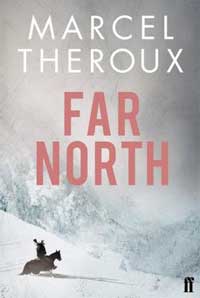 Far North is narrated by Makepeace, a peacekeeper who still does her rounds in one of these frozen, deserted towns. (Her gender is kept hidden for a few chapters, before being revealed in an Amis-like flourish, surprising but not interesting.) The first third or so of the book consists of brief, disjointed encounters with a variety of pleasant, unpleasant, and deeply unpleasant people, and concludes with her imprisonment in a labour camp. Working in the camp, she begins to hear rumours of “The Zone”, a contaminated area still full of the riches of mankind’s past… (Keep reading …)
Rebel Inc. Classics remembered
Wednesday, 20th May 2009.
A conversation this morning with RobAroundBooks on Twitter reminded me of a forgotten but much-loved imprint, Rebel Inc. Classics. I was surprised that people hadn’t heard of them, but looking around, it does seem that they’ve been pretty effectively erased from the publishing landscape. With some of their titles fetching (or at least, asking) high prices on eBay, they probably aren’t even that easy to find in the secondhand shops anymore. (Keep reading …)
The Golden Book Hotel Association: Free Books in Italian Hotels
Monday, 18th May 2009.
A while ago I was staying at Il Loggiato in Bagno Vignoni in Siena. It’s a lovely little place in a tiny (two dozen buildings?) spa town on the side of a hill. The accommodation was great, and the two sisters who run it put a lot of work into making a friendly, informal atmosphere; there’s a tray of fresh cakes and wine in the lounge for the guests to help themselves, and there was also a little stack of free books. Naturally, I helped myself liberally to all three, but here I’ll concern myself with the books. (Keep reading …)
Rhyming Life and Death by Amos Oz
Wednesday, 13th May 2009.
In Rhyming Life and Death, the latest novel by Israeli author Amos Oz, an unnamed author walks the streets of Tel Aviv, killing time before he’s due to appear at a talk on his work in a nearby cultural centre. He dreads the coming series of questions—Why do you write? What do you think of other writers? Do you write with a pen or a computer?—all of which he’s heard before, and all of which he will answer tonight just as evasively, as vaguely, as he always has done. Sitting in a cafe, he attempts to distract himself from the upcoming event by creating a back story for the waitress who serves him. Her name is Ricky, he decides, and he goes on to imagine the story of her first love affair. (Keep reading …)
Snowbooks
Tuesday, 12th May 2009.
Now in their fifth year, UK-based Snowbooks describe themselves as a “feisty, award-winning independent book publisher”. Their list includes a range of general and genre fiction, along with sports, martial arts, and craft books. They’re a tech-savvy bunch, even providing these services to other publishers with their Snowangels project, so it should be interesting to see what they’ve done with their own online presence.

First impressions
The first thing that hits you about the Snowbooks design is how open it is: there’s plenty of white space here, and everything has room to breathe. (Keep reading …)
How to not read a book: Brothers by Yu Hua
Monday, 11th May 2009.
Over the last couple of months, I’ve been dedicating odd hours to not reading Brothers, the new novel by Chinese author Yu Hua.
It started a few months ago, round about the time that we had all that fuss about Roberto Bolaño’s 2666. That book was getting a lot of coverage, and I was thinking of getting hold of a copy and reviewing it myself, but it was an awfully big book, and it was being very ably reviewed elsewhere. Still, I liked the idea of grappling with a big, translated monster, and so I was intrigued when I heard about the imminent arrival of Yu Hua’s Brothers. (Keep reading …)